

Are Essential Oils Safe for Migraines? What to Know
Last Updated: November 17, 2026
Quick Summary
Are essential oils safe for migraines? They can be safe for some adults when properly diluted and inhaled or applied topically, but they are not risk-free, and strong aromas can trigger attacks in scent-sensitive people. Never swallow essential oils, and always patch test before use.
- Dilute essential oil in a carrier oil and patch test your inner forearm for 24 hours first.
- Undiluted peppermint on the temples can cause burning and redness, especially near the eyes.
- Lavender is the most studied option and the gentlest place to start.
- Skip essential oils if you have asthma, COPD, or another respiratory condition unless a clinician approves.
- Stop using an oil and seek medical advice if you notice wheezing or a headache that intensifies within minutes.
Scents triggering your migraines?Handcrafted, low-scent relief products made with organic ingredients.
Shop Relief Roll-On
Table of Contents
- Are Essential Oils Safe for Migraines?
- How to Use Essential Oils for Headaches
- Lavender Oil for Migraine Headache Relief
- Peppermint Oil for Migraine and Tension Headaches
- Using Essential Oils for Headaches in a Diffuser
- Scent Sensitivity, Side Effects, and Who Should Skip Essential Oils
- Trying an Essential Oil Safely: Your Next Step
- Frequently Asked Questions
Are Essential Oils Safe for Migraines?
If you are wondering are essential oils safe for migraines, the answer is that they can be safe for some people, but they are not risk-free, and it depends heavily on how you use them and how sensitive you are to scent.
The short answer: topical and inhaled essential oils can be safe for some adults when properly diluted, but they are not risk-free, and strong aromas can trigger attacks in scent-sensitive people. But strong aromas can also trigger attacks in scent-sensitive people, and swallowing essential oils is never safe.
Below, we break down what the research actually shows, how to dilute and apply oils, and who should skip them entirely.
What the Research Actually Shows
The evidence for essential oils as a migraine treatment is limited and mixed. Most studies are small, and many test aromatherapy massage rather than oils alone.
Aromatherapy is best understood as a complementary treatment, not a replacement for medical care.
A promising result in a small study is not proof. It is a signal worth discussing with your doctor, especially if you take prescription medication.
- Evidence is strongest for lavender and peppermint
- Many studies are small or poorly controlled
- Results vary widely from person to person
- Oils should never delay real medical treatment
How to Use Essential Oils for Headaches
There are two safe ways to use essential oils for headaches: inhalation and diluted topical application. Never swallow essential oils, and never apply them undiluted to your skin.
Here is the standard method we recommend:
- Choose a single oil, such as lavender or peppermint
- Dilute it in a carrier oil before touching your skin
- Patch test on your inner forearm and wait 24 hours
- Apply a small amount to temples or the back of the neck
- Keep it away from eyes, nostrils, and broken skin
- Stop at the first sign of burning or irritation

The woman is American.
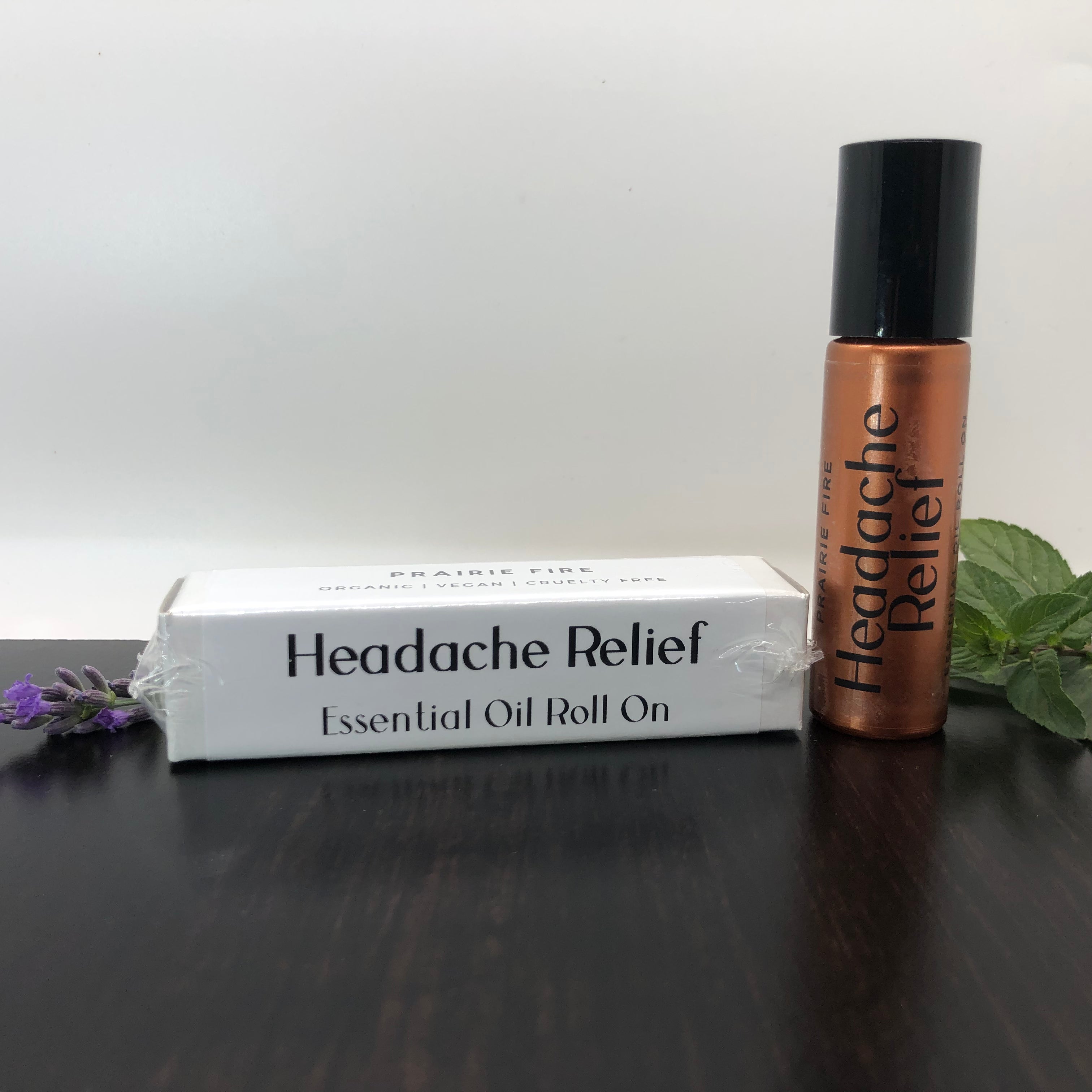
If you would rather skip the mixing step, our lavender peppermint headache relief stick is already blended and ready to apply.
Dilution and Carrier Oils for Topical Use
Dilution means mixing essential oil into a carrier oil so the concentration is low enough for skin. A common starting point is a few drops of essential oil per teaspoon of carrier oil. Less is more when you are scent-sensitive.
Good carrier oils include:
- Jojoba oil
- Sweet almond oil
- Fractionated coconut oil
- Sunflower oil
Watch out: undiluted peppermint on the temples can cause burning and redness, especially near the eyes. Always dilute first.
Here is the standard method the article recommends for using essential oils safely.
| Step | What to do |
|---|---|
| 1 | Choose a single oil, such as lavender or peppermint |
| 2 | Dilute it in a carrier oil before touching skin |
| 3 | Patch test on inner forearm and wait 24 hours |
| 4 | Apply a small amount to temples or back of neck |
| 5 | Keep it away from eyes, nostrils, and broken skin |
| 6 | Stop at the first sign of burning or irritation |
Lavender Oil for Migraine Headache Relief
Lavender oil for migraine headache is the most studied option, and it is the gentlest place to start. It has a soft floral aroma that most people tolerate well, and it is often used through inhalation or a light temple massage.
- Best for: stress-linked headaches, evening wind-down
- Use: inhaled or diluted on the temples
- Watch out: skip it if floral scents are a known trigger
Peppermint Oil for Migraine and Tension Headaches
The catch is intensity. Peppermint is a strong aroma, and strong aromas are a common migraine trigger. Test it on a calm day, not mid-attack.
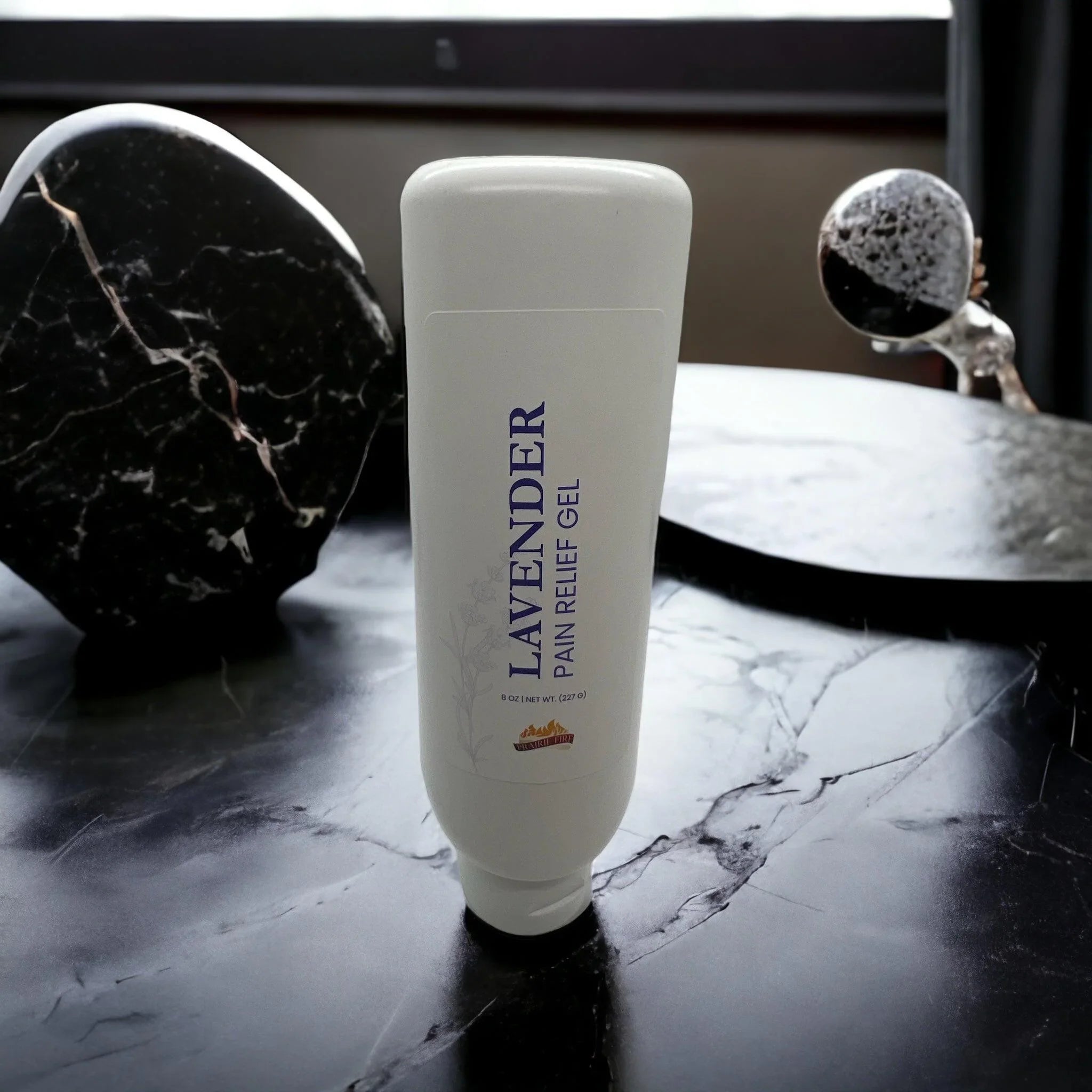
Our lavender and menthol soothe pain gel pairs both oils in a warming and cooling topical formula for muscle and joint discomfort.
Using Essential Oils for Headaches in a Diffuser
A diffuser spreads aroma through a room, which makes it the least precise way to use essential oils for headaches in a diffuser setting. You cannot control the dose, and everyone nearby breathes it in. Because a diffuser exposes everyone nearby to an uncontrolled aroma, keeping strong scents out of shared spaces can also help prevent headaches from car scents.
That is fine in a well-ventilated room for a short session. It is a poor choice if anyone in the house is scent-sensitive, asthmatic, or prone to migraine triggers.
- Run it for short sessions, not all day
- Keep the room ventilated
- Use one oil at a time
- Stop if anyone gets a headache or coughs
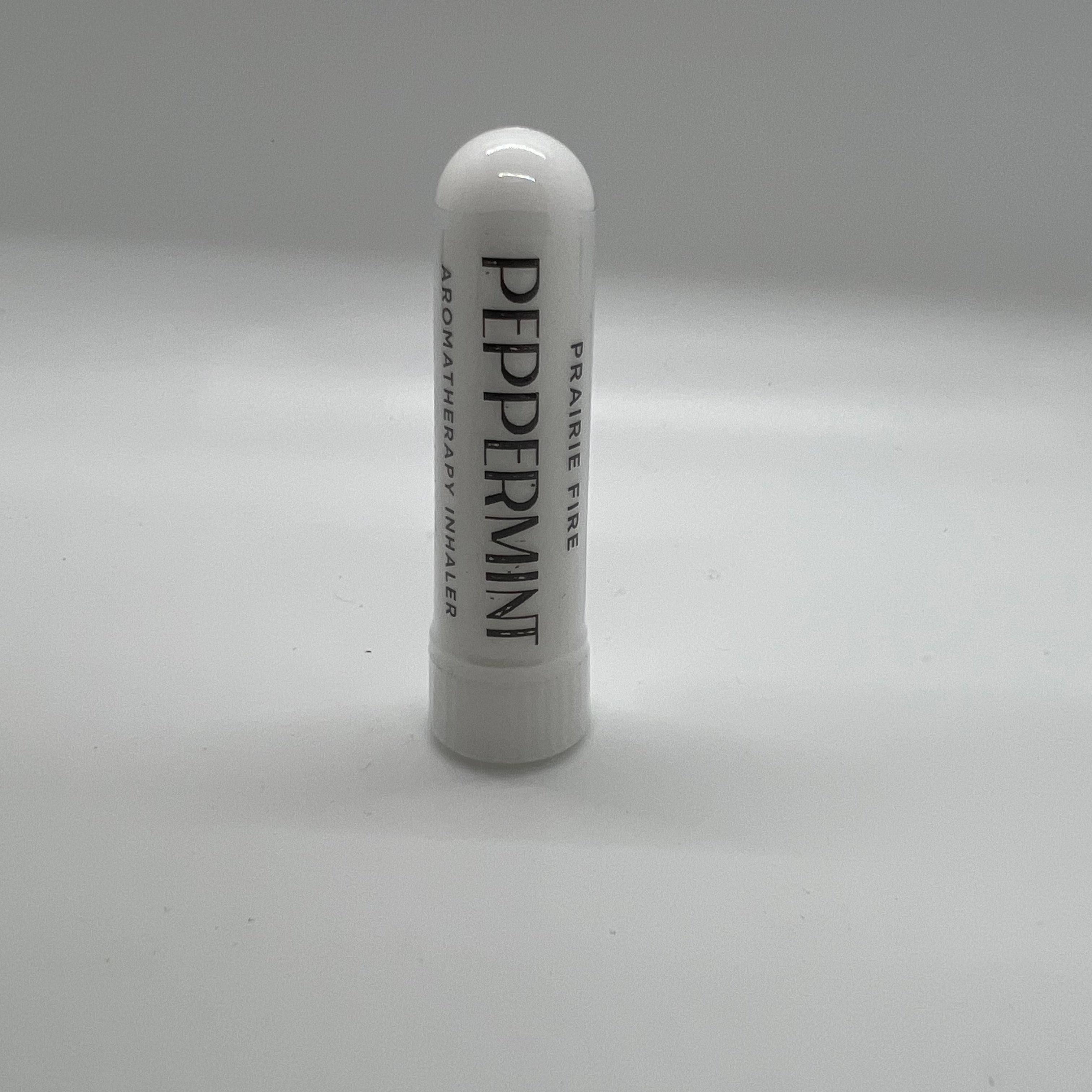
For personal use, a peppermint aromatherapy inhaler keeps the scent close to you instead of filling the room.
Scent Sensitivity, Side Effects, and Who Should Skip Essential Oils
Scent sensitivity is the biggest reason to be cautious, and it is also the most misunderstood. For some people with migraine, a strong aroma is not relief, it is the trigger.
That is not a reason to avoid aromatherapy entirely. It is a reason to test it deliberately, on a calm day, at the lowest effective dose, and to stop at the first sign that your head is responding the wrong way.
Common side effects to expect:
- Skin irritation, redness, or a burning sensation at the application site
- Allergic contact dermatitis, a delayed rash that can appear 12 to 48 hours after exposure
- Stinging if peppermint or eucalyptus reaches the eyes or broken skin
- Nasal or throat irritation from inhaled oils, especially in a closed room
- Headache or nausea from a scent that turns out to be a personal trigger
Ask your clinician before using essential oils if you:
- Have asthma, COPD, or another respiratory condition, inhaled oils can bronchoconstrict in sensitive people
- Are pregnant or breastfeeding, safety data for most oils in pregnancy is thin, and some, including wintergreen and camphor, are best avoided
- Have sensitive skin, eczema, or rosacea
- Have had an allergic reaction to a plant oil, fragrance, or botanical extract before
- Find that perfumes, cleaning products, or strong scents reliably set off your attacks
- Take prescription medication, some oils, particularly those containing menthol or high-dose eugenol, may interact with drugs metabolized by the liver, and topical camphor or wintergreen can compound with blood thinners
- Are treating a child, children absorb and metabolize oils differently, and menthol-containing products should not be used on the face of an infant or young child
Ingestion is a separate and more serious risk. Essential oils are highly concentrated plant extracts, and swallowing them, even a few drops, can cause mouth and throat burns, nausea, vomiting, and in some cases liver or central nervous system effects. Do not add oils to water, capsules, or food unless a qualified clinician has specifically directed it. 'Natural' does not mean safe, and the dose that is fine on your skin is not the dose that is fine in your stomach.
Product quality matters more than the label suggests. Look for a botanical Latin name on the label, a batch or lot number, and a stated country of origin. Avoid oils sold without an ingredient list, and be wary of anything priced far below the market rate for that plant, it is often diluted with a carrier or a synthetic fragrance.
Stop using an oil and seek medical advice if you notice:
- A rash, hives, or swelling that does not fade within a few hours
- Burning that gets worse rather than easing
- Wheezing, shortness of breath, or chest tightness
- A headache that intensifies within minutes of exposure
- Any sign of ingestion in a child or pet
People with sensitive skin may want to read more about natural alternatives for sensitive skin before trying a new topical product.
Trying an Essential Oil Safely: Your Next Step
The safest path is a slow, one-variable test. Pick one oil. Dilute it. Patch test it on a calm day. Then try a small amount during a mild headache, not a severe attack.
Keep a simple log:
- Which oil you used
- How much and where you applied it
- Your pain level before and after
- Any irritation or trigger symptoms
If oils do not help, or your attacks are getting worse, talk to a healthcare professional. Essential oils are a comfort measure, not a cure.
At Prairie Fire Candles, we make low-scent, handcrafted home and body products for people who react to strong fragrance. Our headache relief roll-on and peppermint inhaler are simple, portable ways to try aromatherapy without a diffuser. Get started with Prairie Fire Candles and find a gentler way to manage scent at home.
If scent has ever turned a good day into a migraine, you already know how much the products around you matter. Prairie Fire Candles makes handcrafted, low-scent options with organic ingredients and no harsh additives, so your home stays comfortable. Explore the collection and add a little calm to your routine.
Frequently Asked Questions
Can essential oils trigger or worsen a migraine?
Yes. Strong scents are a known migraine trigger for some people, and essential oils are concentrated aromatics. If you already react badly to perfume, scented candles, or cleaning products, an essential oil can set off the same response. Test any new oil in a small amount, well away from an attack, and stop at the first sign of nausea, worsened pain, or a new aura. Anyone with asthma or a diagnosed scent sensitivity should ask a healthcare professional before trying oils at all.
Is it safe to put essential oils directly on your skin?
Undiluted essential oils can cause skin irritation, redness, and allergic reactions, so dilute them in a carrier oil before applying to the head or neck. A common starting point is a few drops of essential oil per teaspoon of carrier oil, and a patch test on the inner forearm 24 hours ahead shows how your skin responds. Keep oils away from the eyes and broken skin, and wash your hands after applying. If burning or a rash appears, stop using the oil.
Can you use essential oils in a diffuser for a migraine?
A diffuser releases scent into the whole room, which helps if you want a low-effort option but raises the risk of overexposure and of bothering others nearby. Run it for short sessions in a ventilated space, use only a few drops, and leave the room if symptoms worsen. A personal inhaler is a more controlled alternative because the aroma stays close to you. Anyone with respiratory sensitivity should be cautious with diffusers.
When should you seek medical care for a severe headache?
Get urgent care for a sudden, severe headache that peaks within seconds, a headache with fever, stiff neck, confusion, weakness, vision loss, or after a head injury. Also seek help if headaches are becoming more frequent or intense, if they wake you from sleep, or if over-the-counter pain relief stops working. Essential oils are a complementary comfort measure at best and should never delay evaluation of a headache that behaves differently from your usual pattern.

Tags:
Related articles
How Long Do Natural Candles Burn?
Nov 07 2026
Zero Waste vs Low Waste Lifestyle Explained
Nov 05 2026