
Primally Pure Alternative for Sensitive Skin
Table of Contents
- What a Sensitive-Skin Alternative Needs to Do
- Tallow Balm for Sensitive Skin: How Prairie Fire Compares
- Tallow Balm for Eczema-Prone Skin: What the Ingredient List Says
- Fragrance-Free Moisturizer for Sensitive Skin: Sizes and Real Prices
- How to Patch Test Skincare Without Wasting a Jar
- Cleansing Alternatives: Fragrance-Free Tallow Soap Bars
- Frequently Asked Questions
Last Updated: October 12, 2026
What a Sensitive-Skin Alternative Needs to Do
If your skin reacts to almost everything, the real question isn't which brand to switch to. It's which ingredients to remove. A Primally Pure alternative for sensitive skin only works if it strips the formula down to what reactive skin actually tolerates.

Sensitive skin is skin that reacts faster and more visibly to irritants than most, showing up as redness, stinging, itching, or dryness after contact with a trigger. Fragrance, essential oils, dyes, and harsh preservatives are the usual suspects.
At Prairie Fire Candles, we've worked with customers who came to us after reacting to conventional products.
So before you compare brands, define what you're replacing. If your current routine includes a scented cream, a foaming cleanser, or a deodorant with baking soda, those are three separate problems. Fixing one won't fix the others.
Here's what a genuine alternative needs:
- A short ingredient list you can read without a chemistry reference
- No added fragrance and no masking agents
- No dyes, parabens, phthalates, or sulfates
- A patch-test plan before it touches your face
- Clear pricing so you're not gambling a large jar on an untested formula
Key Takeaway
The best alternative for reactive skin isn't the most expensive one. It's the one with the fewest ingredients that could trigger a reaction.
Tallow Balm for Sensitive Skin: How Prairie Fire Compares
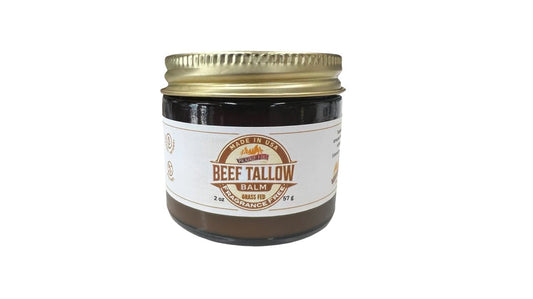
The simplest swap for a scented moisturizer is a tallow balm for sensitive skin made from beef tallow and cold pressed extra virgin olive oil. That's the entire formula in our unscented version, and it's why we recommend it first.

Beef tallow has been used for generations as a traditional skin moisturizer. Its fatty acid profile sits close to the oils your skin produces, so it supports the skin barrier rather than sitting on top of it. Our balm is rich in vitamins A, D, E, and K and contains no fillers, dyes, or unnecessary additives.
What most guides miss is that water-based lotions need preservatives and stabilizers to stay shelf stable. A concentrated balm doesn't. That's fewer ingredients touching reactive skin.
A pea-sized amount covers the face. Apply it to slightly damp skin and massage until absorbed. Skin typically feels soft and nourished rather than oily.
Fragrance-Free vs. Unscented: The Label Difference That Matters
These two labels are not interchangeable, and the difference matters more for reactive skin than almost anything else on the jar.
Fragrance-free means no fragrance is added to make the product smell a certain way, and no masking scent is added to hide the smell of other ingredients. Unscented means the product may still contain chemicals or masking agents that neutralize the odors of other ingredients.
For someone with fragrance-triggered reactions, "unscented" can be the worse choice. Our balm and soap are fragrance-free, not unscented, and we also offer scented versions with therapeutic essential oils for people who tolerate them.
Tallow Balm for Eczema-Prone Skin: What the Ingredient List Says
For eczema-prone skin, the ingredient list is the whole story. Our tallow balm contains organic grass-fed beef tallow and cold pressed extra virgin olive oil. Nothing else in the unscented version.
But "short list" alone isn't the point. The point is which specific ingredients are absent, and why each one matters for reactive skin. Here's the ingredient-by-ingredient comparison most guides skip.
| Ingredient class | Common in "natural" body butters | Why it can trigger reactive skin | In our unscented balm? |
|---|---|---|---|
| Added fragrance / parfum | Often | Fragrance is the most frequently cited contact allergen in cosmetics | No |
| Essential oils (lavender, citrus, peppermint) | Often | Natural, but limonene, linalool, and menthol are recognized irritants for some skin | No |
| Baking soda | Sometimes (deodorant, scrubs) | Alkaline pH can disrupt the acid mantle and cause stinging | No |
| Physical exfoliants (salt, sugar, walnut) | Sometimes | Micro-abrasion on compromised skin worsens barrier damage | No |
| Preservatives (phenoxyethanol, parabens, methylisothiazolinone) | Required in water-based formulas | Necessary in lotions, but a known sensitizer class for some people | Not needed, no water phase |
| Shea, coconut oil, botanical blends | Often | Generally well tolerated, but each is an additional variable to isolate | No |
| Colorants / dyes | Sometimes | Unnecessary for function; another variable | No |
That last row is the mechanism most guides miss. Water-based lotions need a preservative system because water supports microbial growth. A concentrated anhydrous balm made only of tallow and olive oil has no water phase, so it doesn't need preservatives, emulsifiers, or stabilizers. Fewer functional categories means fewer chances for a reaction.
We're not going to tell you a balm treats eczema. That's a medical question for your dermatologist. What we can tell you is what's in the jar, what isn't, and why each omission matters for skin that reacts easily.
If you're coming from a heavily fragranced product, expect an adjustment period. Your skin may need a week or two to settle before you judge results. If you're also replacing a deodorant, note that baking soda is a common irritant in natural deodorants and is worth eliminating separately from your skincare swap.
Watch Out
Don't layer a new balm over an active flare without checking with your doctor first. Adding an untested product to broken skin is how minor irritation becomes a real problem.
Fragrance-Free Moisturizer for Sensitive Skin: Sizes and Real Prices
A fragrance-free moisturizer for sensitive skin should be easy to try at a small size before you commit to a large one. That's how we price ours, and it's the single best way to limit your risk.
Grass Fed Beef Tallow Balm 4 oz – Organic Natural Skin Moisturizer for Face →
| Product | Price | Cost per oz | Best For |
|---|---|---|---|
| Grass Fed Beef Tallow Balm | $19.99 | $10.00 | First-time buyers testing tolerance |
| Grass Fed Beef Tallow Balm | $25.99 | $6.50 | Regular face and body use |
| Grass Fed Beef Tallow Balm | $35.99 | $4.50 | Households using it daily |
| Beef Tallow Soap Bar | $9.99 | $2.22 | Testing a cleanser swap |
| Beef Tallow Soap Bars | $26.99 | $2.00 | Committing to a bar routine |
The 2 oz jar is the sensible starting point if your skin is unpredictable. Because the balm is concentrated, most customers find a jar lasts considerably longer than a comparable lotion, so the per-use cost is lower than the sticker price suggests. A pea-sized amount covers the face, which means a 2 oz jar typically lasts weeks of daily facial use, not days.
The step from 2 oz to 4 oz drops your cost per ounce by about a third. The step from 4 oz to 8 oz drops it again. That's the value curve to weigh against how confident you are that tallow works for your skin.
A few practical details that matter as much as price:
- Return policy. Check the return window before you buy a full-size jar.
- Availability. Small-batch makers sell out. If a size is out of stock, the 2 oz trial size is usually the last to go, so start there rather than waiting on the 8 oz.
- Shipping. Concentrated balms ship light and don't need cold-chain handling, so shipping cost per order is low relative to water-based lotions that weigh more per ounce of active product.
Our 2 oz and 4 oz balms are priced at $19.99 and $25.99. The 8 oz size at $35.99 brings the cost per ounce down for anyone who already knows tallow works for them. If you're unsure, buy small, patch test, and size up only after your skin has had a week or two to respond.
How to Patch Test Skincare Without Wasting a Jar
Learning how to patch test skincare properly takes about five minutes of setup and three days of patience. It's the cheapest insurance you can buy against a reaction.

Here's the routine we suggest:
- Wash and dry the inner forearm, an area that's easy to watch
- Apply a pea-sized amount of balm to a small square of skin
- Leave it uncovered and don't wash the area for 24 hours
- Check for redness, itching, or swelling at 24 and 48 hours
- If clear, repeat on a small patch behind the ear or along the jaw
- Wait another 48 hours before applying to your full face
Stop at any step if you see a reaction, and wash the area with cool water. If a reaction is severe or doesn't settle, contact your doctor.
Pro Tip
Photograph the patch under the same lighting each day. Subtle redness is easy to miss in the moment and obvious in a side-by-side comparison.
Cleansing Alternatives: Fragrance-Free Tallow Soap Bars
The cleanser is the step most people overlook, and it's often the one doing the damage. A fragrance-free tallow soap bar is the simplest replacement for a foaming cleanser with synthetic fragrance.
Our bars are made from grass-fed and finished beef tallow, water, and sodium hydroxide. Sodium hydroxide is used in traditional soap making and is not present in the final cured bar. The bars are fragrance-free, dye-free, and palm oil free, with no parabens, phthalates, sulfates, or harsh detergents.
What separates a tallow bar from a commercial soap is what happens after you rinse. Commercial formulas often strip the skin's natural oils and leave it tight. A tallow bar's fatty acid profile is compatible with human skin, so it helps maintain the moisture barrier instead of breaking it down.
Lather with water, apply gently, and rinse thoroughly. Let the bar dry between uses to extend its life. The single bar is $9.99, and the three-pack is $26.99.
Reactive skin doesn't need a bigger routine. It needs fewer ingredients that could set it off.
Prairie Fire Candles makes fragrance-free, dye-free skincare in small batches, including our grass-fed beef tallow balm and our fragrance-free tallow soap bars, both built on short ingredient lists you can read in full.
Frequently Asked Questions
What is a good alternative to Primally Pure for sensitive skin?
A good alternative uses a short ingredient list, avoids added fragrance and dyes, and states its sourcing. Prairie Fire Candles makes fragrance-free grass-fed beef tallow balm in a 2 oz jar for $19.99, a 4 oz jar for $25.99, and an 8 oz jar for $35.99, plus fragrance-free beef tallow soap bars at $9.99 for one or $26.99 for three. Each formula lists beef tallow, cold pressed extra virgin olive oil, and nothing else in the unscented version.
Is tallow balm good for sensitive skin?
Tallow balm suits sensitive skin when the formula stays short and fragrance-free. The balms here blend organic grass-fed beef tallow with cold pressed extra virgin olive oil, and the fragrance-free option adds no scent or masking agents. Because the balm is concentrated, a pea-sized amount covers the face. Patch test on your inner forearm for a few days before using it on your face, especially if your skin reacts to new products.
Can tallow balm help soothe eczema-prone skin?
Tallow balm supports the skin barrier rather than stripping it. The beef tallow balms here contain fatty acids compatible with skin and vitamins A, D, E, and K, and they are dye free with a fragrance-free option, which matters when your skin reacts to added scent. Pair the balm with the fragrance-free tallow soap bar so cleansing does not undo the moisture. If your eczema is severe, keep your dermatologist in the loop alongside any new product.
How do you patch test a new skincare product?
Apply a small amount to clean skin on your inner forearm, an area thin enough to react quickly but easy to cover. Wait 24 hours, then check for redness, itching, or bumps. If your skin stays calm, repeat for two or three more days before trying the product on your face. Keep the test area dry and avoid applying anything else to it during the test so you can trace any reaction to the balm.
What is the difference between tallow balm and regular moisturizer?
Water-based lotions need preservatives and stabilizers to stay shelf stable. Tallow balm skips the water entirely, so it is concentrated and needs no preservatives. A pea-sized amount of the 8 oz jar, $35.99, goes further than the same amount of lotion. That concentration is why the balm suits dry, sensitive, or mature skin, and why it works best applied to slightly damp skin to lock in moisture.
Tags:
Previous
Grass-Fed Tallow Balm for Dry Skin: A 2026 Review
Next
Non Toxic Candles for Clean Air: 2026 Buying Guide