
Non Toxic Candles for Clean Air: 2026 Buying Guide
Table of Contents
- What Makes a Candle Non-Toxic and Clean-Burning
- Candle Ingredients to Avoid: Paraffin, Dyes, and Synthetic Additives
- Beeswax Candles for Clean Air: What the Evidence Actually Shows
- Best Non-Toxic Candles: Our Top Picks for 2026
- How to Burn Candles Safely Indoors
- Choosing Non Toxic Candles for Asthma, Allergies, and Fragrance Sensitivity
- Conclusion: Clean Air Starts With Better Candle Choices
- Frequently Asked Questions
Last Updated: October 14, 2026
What Makes a Candle Non-Toxic and Clean-Burning
A non toxic candle is one made from natural wax, a lead-free wick, and fragrance that is free of phthalates and synthetic additives, so it burns without releasing the soot and volatile organic compounds linked to poor indoor air quality. At Prairie Fire Candles, we hand-pour every candle on our family farm from 100% American soy wax, which is biodegradable and free of paraffin, dyes, lead, and zinc.

Three variables decide whether a candle belongs in the non toxic category: wax, wick, and fragrance. Get all three right and you have a clean-burning candle. Get one wrong and the others hardly matter.
Wax, Wick, and Fragrance: The Three Variables That Matter
Wax sets the baseline. Natural waxes such as soy, beeswax, and coconut burn cooler and cleaner than paraffin, which is a petroleum byproduct. A wax blend can work, but only if the natural wax leads the formula.
The wick is the second variable. A cotton wick or wood wick that is lead-free and zinc-free keeps the flame steady and limits soot. The third is fragrance: phthalate-free fragrance oils or essential oils, never synthetic fragrance loaded with additives.
- Wax: soy, beeswax, or coconut wax instead of paraffin
- Wick: braided cotton or wood, always lead-free
- Fragrance: phthalate-free and paraben-free, with no added dyes
The American Lung Association's guidance on indoor air quality is a useful starting point for understanding why combustion byproducts matter in a closed room.
Key Takeaway
Clean-burning candles come down to three things: natural wax, a lead-free wick, and phthalate-free scent. If a label is vague on any of the three, treat it as a warning sign rather than a marketing quirk.
Candle Ingredients to Avoid: Paraffin, Dyes, and Synthetic Additives
The ingredients to avoid in candles are paraffin wax, lead or zinc wicks, synthetic dyes, and phthalates. Each one adds something you do not want in the air of a room you actually live in.
Paraffin wax is refined from petroleum. When it burns, it can release soot and volatile organic compounds into indoor air. Lead-core wicks, once common, are now understood to release harmful metal particles when burned, which is why lead-free wick standards exist in the first place.
Why Paraffin Wax, Lead Wicks, and Synthetic Dyes Are Problematic
Synthetic dyes serve no purpose beyond color. They add another combustion byproduct and another ingredient your lungs have to process. Phthalates, used to stretch synthetic fragrance, are the additive most often flagged by people with fragrance sensitivity.
Many shoppers now look for candles labeled dye-free, phthalate-free, and paraben-free for exactly this reason. That is a reasonable filter, and it is the standard we hold our own products to.
- Paraffin wax: petroleum-based, can produce soot and particulate matter
- Lead and zinc wicks: can release metal particles when burned
- Synthetic dyes: unnecessary combustion additives
- Phthalates: common in synthetic fragrance, a frequent irritant
Watch Out
A candle can say "natural" on the front label and still contain paraffin or synthetic fragrance. The front of the package is marketing; the ingredient list on the back is the part that matters.
Beeswax Candles for Clean Air: What the Evidence Actually Shows
Beeswax candles for clean air are often marketed as air purifiers that release negative ions and neutralize pollutants. The honest answer is that the evidence for measurable air purification is thin.
If you want better air quality, ventilation does far more than any candle. Open a window, run a range hood, and use an air purifier if you have one. Then choose a clean-burning candle for ambiance, not as a filtration device.
That distinction matters because it changes how you shop. You are not buying a purifier. You are buying a candle that adds as little to the air as possible while still doing the job a candle is meant to do.
Pro Tip
If a brand claims its candle "purifies" or "cleans" the air, ask what testing supports that claim. In practice, no candle replaces ventilation or a HEPA filter, and a maker who is honest about that is usually more careful about ingredients too.
Best Non-Toxic Candles: Our Top Picks for 2026
The best non toxic candles pair a natural wax with a lead-free cotton wick and phthalate-free fragrance, and they tell you the burn time up front. Every pick below is hand-poured in small batches from 100% American soy wax, dye-free, and free of paraffin, lead, and zinc. Refining your scent profile beyond these standard options often leads to exploring natural fragrance alternatives that rely on pure essential oils and botanical extracts to maintain indoor air quality.
| Candle | Wax | Wick | Burn Time | Price |
|---|---|---|---|---|
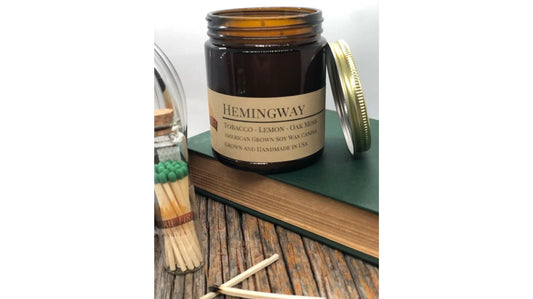
| Hemingway | 100% American soy | Cotton, lead-free | 50+ hours | $19.99 |
| Smudge It! | 100% American soy | Cotton, lead-free | 50+ hours | $19.99 |
| Citron Vert | 100% American soy | Cotton, lead-free | 50+ hours | $19.99 |
| Prairie Sage | 100% American soy | Cotton, lead-free | 50+ hours | $19.99 |
| Cool Cucumber | 100% American soy | Cotton, lead-free | 50+ hours | $19.99 |
| Soy Wax Melts | 100% American soy | Wickless | Warmer-dependent | $3.99 |
| Olive Oil Candle Lamp | Olive oil fuel | 1/8" round wick | 12 hours per fill | $24.99 |
Soy Wax Candles: Hemingway, Smudge It!, Citron Vert, Prairie Sage, and Cool Cucumber
Each of these 9 oz amber apothecary jars holds 8 oz net weight of vegan, non-GMO soy wax and burns for 50+ hours.
Scent profiles vary enough to match the room and the season. Hemingway blends tobacco, lemon, and oak moss for a warm, woody feel. Smudge It! pairs white sage, cedar, and chamomile. Citron Vert is bright lemon peel and lemongrass.
Every one of them is phthalate-free, paraben-free, cruelty-free, and dye-free, with a braided American cotton wick that is lead-free and zinc-free.
Best For
Anyone who wants a scented candle without synthetic dyes or phthalates, and who cares about a long, even burn rather than a strong throw that fades in a week.
Wickless Options: Soy Wax Melts for Flameless Fragrance
Wax melts skip the flame entirely, which makes them the choice for households that want scent without an open fire around kids or pets.
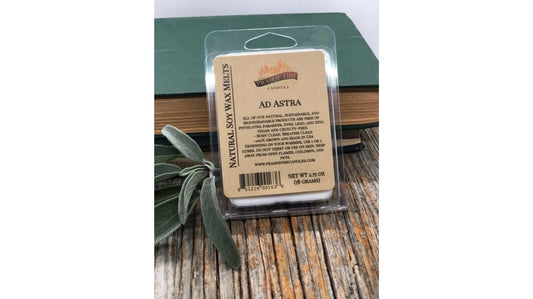
The 2.75 oz clamshell holds six cubes. Use one or two cubes in your warmer depending on its size, never ingest them or apply them to skin, and keep the container away from open flames, children, and pets. The clamshell is 100% recyclable.
At $3.99 a pack, melts are also the cheapest way to test a scent before committing to a full jar.
Soy Wax Melts | Wax Cubes | Wickless Candles | Small Batch | Vegan →
Olive Oil Candle Lamp: The Cleanest Burn for Emergency Light
When you want light rather than scent, an olive oil lamp is the cleanest-burning option we offer. It runs on pure olive oil, a renewable fuel, and burns with no smoke or odors. It is hypoallergenic and easily storable, which makes it a sensible addition to an emergency kit.

The safety case is straightforward: if the lamp tips, the oil douses the wick, and olive oil is not combustible the way petroleum fuels are. A 16 oz mason jar with a handcrafted steel element and a 1/8" round wick burns 12 hours per fill on just a few ounces of oil.
How to Burn Candles Safely Indoors
Burning candles safely indoors comes down to three habits: trim the wick to 1/4 inch before every burn, keep the room ventilated, and never burn longer than the wax pool needs. These habits cut soot, prevent tunneling, and get you the full burn time printed on the label.
Wick Trimming, Ventilation, and Burn Time Basics
A long, untrimmed wick is the single biggest cause of soot and smoke from an otherwise clean-burning candle.
- Trim the wick to 1/4 inch before every burn
- Let the melt pool reach the container's full width before extinguishing
- Stop burning when 1/4 inch of wax remains above the base
- Keep the candle on a heat-resistant surface, away from drafts
- Never leave a burning candle unattended
Ventilation is the other half. Even a clean-burning candle produces some combustion byproducts, so a cracked window or a running exhaust fan keeps indoor air moving. The EPA's indoor air quality resources cover the broader picture of what accumulates in closed rooms.
A wick trimmer makes this easy. Ours is stainless steel, about 7" long, and built to cut the wick to 1/4 inch every burn, which is the difference between a full, even melt pool and a sooty, tunneling jar.

Pro Tip
The first burn sets the pattern for the whole candle. Give it two to three hours so the melt pool reaches the edge of the jar, and every burn after that will follow the same even path.
Choosing Non Toxic Candles for Asthma, Allergies, and Fragrance Sensitivity
For asthma, allergies, and fragrance sensitivity, the safest choice is an unscented or dye-free candle, or a wickless option, and always with ventilation.
If you react to scents, start with the mildest option and test it in a well-ventilated room for a short burn before committing to a full evening. Wax melts let you use a single cube and stop if you notice a reaction.
One note we take seriously: a candle is not a treatment for any respiratory condition.
- Fragrance sensitivity: choose unscented, or test a single cube first
- Asthma: prioritize ventilation and skip added dyes
- Allergies: look for phthalate-free and paraben-free labels
- Kids and pets: wickless melts avoid an open flame entirely
The CDC's guidance on indoor environmental triggers is a helpful reference for reducing irritants at home.
Conclusion: Clean Air Starts With Better Candle Choices
Cleaner indoor air is a series of small decisions, and the candle you burn is one of them.
We built Prairie Fire Candles around that idea. Every candle is hand-poured on our family farm from 100% American soy wax, dye-free and free of paraffin, lead, and zinc, with a braided cotton wick and phthalate-free, paraben-free fragrance.
If you have been meaning to switch to non toxic candles, start with one jar and see how it burns. Add to Cart and make your next evening a cleaner one.
Frequently Asked Questions
Are any candles truly non-toxic?
No candle is 100% emission-free when burned, but some come much closer than others. The cleanest options use natural waxes like soy or beeswax, cotton or wood wicks without lead or zinc, and phthalate-free fragrance oils or no fragrance at all. Candles made with 100% American soy wax, braided cotton wicks, and phthalate-free and paraben-free scents produce far fewer volatile organic compounds and particulate matter than paraffin candles with synthetic dyes and metal-core wicks.
Are soy candles safer than paraffin candles?
Soy wax burns at a lower temperature and produces less soot than paraffin, which is a petroleum byproduct. Paraffin candles can release volatile organic compounds and particulate matter into indoor air. Soy wax is also biodegradable and renewable, while paraffin is not. If you are choosing non toxic candles for clean air, soy wax is a practical starting point because it avoids the toxins and carcinogens associated with paraffin.
Are beeswax candles better for clean air?
Beeswax candles burn cleaner than paraffin and naturally produce negative ions, which some people believe help reduce airborne particles. However, the evidence behind claims that beeswax candles purify or clean indoor air is limited. They still produce some particulate matter when burned. Beeswax candles for clean air are a reasonable choice because they are natural and additive-free, but they are not an air purification system.
What candle ingredients should I avoid?
Avoid paraffin wax, lead-core or zinc-core wicks, synthetic dyes, and phthalates in fragrance oils. These ingredients contribute to soot, smoke, and volatile organic compound emissions. Look for candles labeled phthalate-free, paraben-free, and dye-free. If a candle does not list its wax type or wick material, treat that as a red flag. The candle ingredients to avoid are the ones that add color, synthetic scent, or petroleum-based wax without any burn benefit.
How can I burn candles while reducing indoor air pollution?
Trim the wick to 1/4 inch before every burn to prevent soot and an uneven melt pool. Burn candles in a well-ventilated room, away from drafts. Keep burn sessions under four hours and extinguish the candle once the melt pool reaches the full width of the container. Choose unscented candles or those made with phthalate-free fragrance oils. A stainless steel wick trimmer makes this routine easier and extends burn time.
Tags:
Related articles
Primally Pure Alternative for Sensitive Skin
Oct 12 2026
How to Soothe Eczema with Tallow: A Gentle Guide
Oct 01 2026