
Tallow Balm Ingredients to Look For: A 2026 Guide
Table of Contents
- What to Look for in Tallow Balm Ingredients
- Core Ingredients: Rendered Tallow and Carrier Oils
- Tallow Balm With Coconut Oil: What to Know
- Tallow Balm Ingredients to Avoid
- Tallow Balm for Sensitive Skin: Reading Labels and Patch Testing
- How to Make Tallow Balm at Home
- Conclusion
- Frequently Asked Questions
Last Updated: October 16, 2026
What to Look for in Tallow Balm Ingredients
Tallow balm ingredients should be short, recognizable, and chosen for a reason. A well-made balm starts with rendered beef tallow, adds one or two skin-friendly carrier oils, and stops there unless you want scent.

Most commercial moisturizers list water first, then preservatives and emulsifiers. Tallow balm contains no water, so it needs no preservatives and stays shelf stable on its own, eliminating most ingredients people react to.
Below, we'll show you how to read a tallow balm label, which oils belong in the jar, and which additives to leave on the shelf.
Key Takeaway
The shorter the ingredient list, the easier it is to trace a reaction. If you can't identify every item on the label, you can't isolate what caused irritation.
Core Ingredients: Rendered Tallow and Carrier Oils
Rendered tallow is the base of every true tallow balm. Everything else is optional. Understanding what each component does helps you judge whether a jar is worth buying.
Why Rendered Beef Tallow Works as a Moisturizer
Rendered tallow is beef fat slowly heated and strained to remove impurities, leaving a clean, solid fat that melts at skin temperature. Its fatty acid profile closely mirrors your skin's lipids.
That similarity matters. Tallow contains oleic, palmitic, and stearic acid, the same fatty acids found in human sebum, plus fat-soluble vitamins A, D, E, and K. As an occlusive and emollient, it forms a protective barrier that slows water loss while softening rough patches.
Carrier Oils That Pair Well With Tallow
Carrier oils thin the balm so it spreads instead of dragging, and each changes the texture. Olive, coconut, avocado, jojoba, and sweet almond oil are the most common.
Cold pressed extra virgin olive oil is the pairing we use in our grass fed beef tallow balm because it is widely tolerated, easy to source, and adds emollient quality without competing with the tallow.

Watch Out
Nut oils, including sweet almond oil, can trigger reactions in people with tree nut allergies. If your label says "nut oils" without naming which one, treat it as a risk until the maker confirms the source.
Tallow Balm With Coconut Oil: What to Know
Tallow balm with coconut oil is popular because coconut oil adds slip and a light, clean feel. It is not automatically better for everyone, and the quality of both fats matters as much as the pairing.
What Coconut Oil Actually Does in the Formula
Coconut oil is high in lauric acid, giving it a fast melt point and mild antibacterial properties, so a firmer balm softens quickly in the hand.
The fractionated version, labeled MCT oil or caprylic/capric triglyceride, stays liquid and absorbs faster but loses some whole-oil character. Neither is wrong, the question is whether your skin tolerates it, so patch test before committing to a full jar.
Sourcing and Rendering: Why Two Jars With the Same Label Behave Differently
Two balms can list "beef tallow, coconut oil" and perform nothing alike. The difference is upstream:
- Grass-fed versus grain-fed. Tallow from pasture-raised cattle tends to carry a richer fat-soluble vitamin content (A, D, E, K) than grain-fed fat, a commonly cited reason makers charge more, and worth asking about.
- Suet versus trim fat. Kidney fat (suet) is firmer and cleaner-tasting than trim fat. Suet-rendered tallow produces a harder, less odorous balm; trim fat can smell more strongly of beef.
- Rendering method. Low, slow, wet rendering (heating fat with water and straining) produces cleaner, less odorous tallow than high-heat dry rendering, which can also degrade the vitamins the fat is prized for.
How Coconut Oil Changes Texture and Shelf Life
Coconut oil is solid below about 76°F and liquid above it, so a tallow-and-coconut balm is firm in a cool room and soft, sometimes pourable, in a warm one.
Coconut oil is also more oxidation-prone than tallow, so a high-coconut balm goes rancid faster than an all-tallow or tallow-and-olive formula. Store balm cool and dark, and smell it before each use, a sharp or crayon-like scent means the oils have turned.
| Ingredient | Type | Best For | Watch Out For |
|---|---|---|---|
| Rendered beef tallow | Base | Dry, mature, barrier-damaged skin | Odor and graininess if poorly rendered |
| Olive oil | Carrier | All-purpose daily use | Rare sensitivity in some people |
| Coconut oil | Carrier | Body use, fast absorption | Pore clogging on acne-prone faces; softer in heat |
| Jojoba oil | Carrier | Facial use, oily skin | Higher cost per ounce |
| Sweet almond oil | Carrier | Light body moisture | Tree nut allergen |
| Beeswax | Thickener | Firmer balms, warmer climates | Not vegan |
| Essential oils | Scent | Aromatic preference | Irritation, sensitization, migraine triggers |
Watch Out
If a label says "nut oils" or "botanical oils" without naming which ones, treat it as a risk until the maker confirms the source. The same goes for tallow: if the label does not say grass-fed, suet-rendered, or how it was purified, you cannot judge quality from the ingredient list alone.
::: Transparency in sourcing remains the most reliable indicator of purity, making the process of understanding skincare labels an essential skill for anyone navigating the complexities of modern ingredient lists.
Tallow Balm Ingredients to Avoid
Ingredients to avoid in tallow balm fall into three groups: synthetic preservatives, petroleum derivatives, and fragrance additives. A traditional balm needs none of them.
Start with preservatives.
Next, watch for mineral oil, petrolatum, and other petroleum derivatives used as cheap fillers.
Fragrance deserves its own category. "Fragrance" or "parfum" can hide dozens of undeclared compounds and is one of the most common causes of contact irritation.
If you want to understand how the FDA treats cosmetic labeling and what "fragrance" legally conceals, the FDA guidance on cosmetic labeling is worth reading before your next purchase.
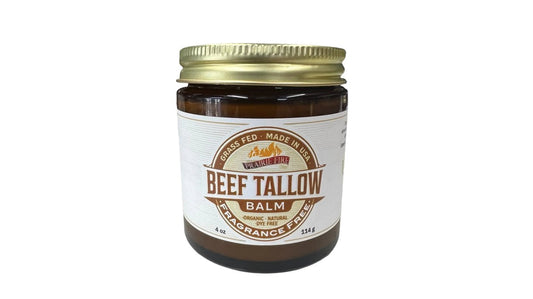
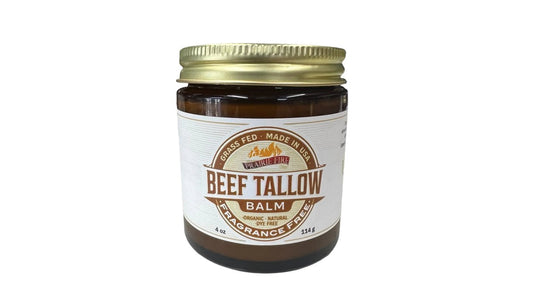
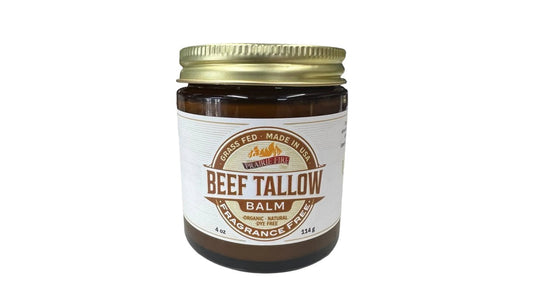
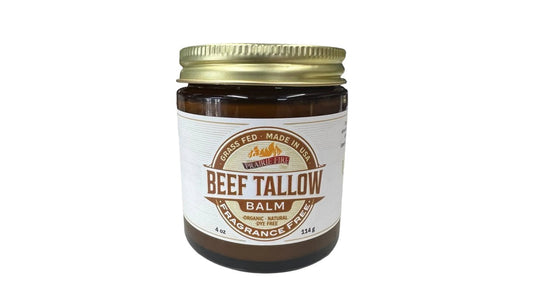
Grass Fed Beef Tallow Balm 4 oz – Organic Natural Skin Moisturizer for Face →
Tallow Balm for Sensitive Skin: Reading Labels and Patch Testing
Tallow balm for sensitive skin should have the shortest ingredient list you can find, ideally tallow and one carrier oil. Two ingredients means two possible culprits if something goes wrong. But "short" is not the same as "safe," so read the label like an evaluator, not a shopper.
A 60-Second Label Checklist
Ingredients appear in descending order by weight, so the first item is what you are mostly buying. Run this checklist before patch testing:
- Is tallow first? If rendered beef tallow is not first, it is not really a tallow balm, it is a carrier oil with a tallow accent.
- How many ingredients total? A traditional anhydrous balm needs two to four. Anything past six is doing something other than tallow and oil.
- Are the oils named specifically? "Olive oil" is traceable. "Botanical oils" or "nut oils" is not. If the maker will not name the source, treat it as an unknown allergen until confirmed.
- Is there a preservative? Anhydrous balms contain no water, so they do not need one. If one appears, ask what water-containing ingredient it is protecting.
- Does it say "fragrance" or "parfum"? Those terms can legally stand in for undeclared compounds, and fragrance is a common cause of contact irritation. "Fragrance free" and "unscented" are not always the same claim, check whether a masking scent was added.
- Any dyes or colorants? A balm does not need them. Yellow or tan color should come from the tallow itself.
Ingredient Cautions by Allergy and Sensitivity
Different people react to different things, and the label tells you which risks apply:
- Tree nut oils (sweet almond, argan, hazelnut): a real allergen concern for anyone with a tree nut allergy. Coconut is botanically a fruit, not a tree nut, but some people with nut allergies still react, patch test regardless.
- Coconut-derived ingredients: coconut oil and its fractions (caprylic/capric triglyceride, MCT oil) are comedogenic for some users, clogging pores and contributing to breakouts, especially on the face.
- Beeswax: generally well tolerated, but not vegan, and a small number of people react to it. It also makes a balm firmer, which matters in cold weather.
If you have a diagnosed allergy, treat any unnamed oil or "fragrance" as a stop sign until the maker confirms the source in writing.
Patch Test Protocol
Patch test every time, even with a product you think is safe:
- Wash a small area on your inner forearm and let it dry.
- Apply a pea-sized amount and rub it in.
- Leave it undisturbed for 24 hours.
- Check for redness, itching, or swelling.
- Repeat on the same spot for three days before using it on your face.
- If you react, stop and note the ingredient list for future reference.
A patch test will not catch every delayed allergy, but it catches most immediate irritation before it spreads. For anyone with eczema, rosacea, or contact dermatitis, a two-ingredient balm is easiest to troubleshoot, if you react, you have only two suspects.
Short formulas are not automatically safe, and long formulas are not automatically risky. The label tells you which risks apply to you, read it before you buy, and patch test before you commit.
How to Make Tallow Balm at Home
Making tallow balm at home takes about an hour of active work and gives you total control over the ingredient list.
You will need rendered grass-fed tallow, a carrier oil such as cold pressed extra virgin olive oil, a double boiler, a glass jar, and a thermometer.
- Render the tallow. Starting with raw suet, chop it finely and heat low and slow until the fat separates from the solids. Strain through cheesecloth; low heat protects the vitamins.
- Measure your ratio. A common starting point is roughly four parts tallow to one part carrier oil. More oil gives a softer balm, more tallow a firmer one.
- Melt gently. Combine tallow and oil in a double boiler and heat until just melted. Do not boil.
- Add beeswax if desired. A small amount gives a firmer balm suited to warm climates.
- Cool slightly, then scent. Add essential oils only after the mixture drops below the point where heat would degrade them.
- Whip for texture. Whipping introduces air and produces a lighter, fluffier balm.
- Jar and label. Pour into clean glass jars and record the date and ratios so you can repeat what worked.
Store your finished balm cool and dark. It contains no water, so it resists spoilage, but the oils can still oxidize.
Pro Tip
Weigh your ingredients instead of measuring by volume. Tallow and oil pack differently depending on temperature, so a scale gives you a repeatable ratio every time.
Conclusion
Getting the ingredient list right is the whole game with tallow balm.
We built our grass fed beef tallow balm around exactly that principle: organic tallow from Kansas native pasture, cold pressed extra virgin olive oil, and nothing else unless you choose a scented version.
Add to Cart and start with the 2 oz jar if you want to patch test first, or the 4 oz and 8 oz sizes if you already know tallow works for your skin.

Frequently Asked Questions
What ingredients should I look for in tallow balm?
Look for a short list: rendered beef tallow from grass-fed cattle and one or two cold-pressed carrier oils like olive oil. That is the entire formula in a well-made balm. Avoid products with long ingredient lists, synthetic preservatives, or artificial fragrance. A simple tallow balm ingredients label should read like something you could make in your own kitchen.
Can tallow balm contain coconut oil or essential oils?
Yes, both are common. Coconut oil adds a lighter feel and a subtle scent, though it can clog pores for some people. Essential oils add fragrance and may offer minor skin benefits, but they are also a frequent cause of irritation. If you have sensitive skin, choose an unscented tallow balm with no essential oils and patch test before using it on your face.
Is unscented tallow balm better for sensitive skin?
For most people with sensitive skin, yes. Fragrance, whether synthetic or from essential oils, is one of the top causes of contact dermatitis. An unscented tallow balm skips that risk entirely. Prairie Fire Candles offers a fragrance-free option with just two ingredients: grass-fed beef tallow and cold-pressed extra virgin olive oil. That simplicity is what makes it a strong choice for reactive skin.
What ingredients should I avoid in tallow balm?
Avoid parabens, phthalates, synthetic fragrance, artificial dyes, and petroleum-derived fillers. Also skip balms that list water or aloe as a first ingredient, since water-based formulas need preservatives. If you have nut allergies, check for sweet almond oil or other nut oils. A clean tallow balm ingredients list should not include anything you cannot pronounce or find in a grocery store.
How can I tell whether a tallow balm has a simple ingredient list?
Count the ingredients. A simple balm has two to five. If the label lists more than eight items, it likely contains preservatives, emulsifiers, or fragrance. Look for tallow as the first ingredient, followed by one or two carrier oils. Anything else should be optional and clearly labeled, such as vitamin E for shelf life or a specific essential oil for scent.
Is tallow balm suitable for all skin types?
Tallow balm works well for dry, mature, and sensitive skin because its fatty acids closely match human sebum. Oily or acne-prone skin may find it too heavy, especially formulas with coconut oil. If you have combination skin, start with a small amount on a dry patch and see how your skin responds. A patch test on your inner arm for 24 hours is the safest first step.
Tags:
Related articles
Primally Pure Alternative for Sensitive Skin
Oct 12 2026