Buy More, Save More: 2+ Items 10% Off • 4+ 15% Off • 6+ 20% Off • 12+ 30% Off | FREE U.S. Shipping $19.99+ | Supports Prairie Fire Paws 🐾| Questions? Contact Us Using Our Chat Anytime.
How We Tested and Ranked These Eco-Friendly Candles
The best eco friendly candles in 2026 come down to three things you can verify on the label: a plant-based wax, a lead-free cotton wick, and fragrance that skips phthalates, which is exactly how we chose every eco friendly candles pick in this guide. At Prairie Fire Candles, we build every pick in this guide around those three checks, then weigh burn time and cost per hour so the value is obvious.
Here is the honest part most roundups skip. "Non-toxic" and "clean-burning" are marketing words, not regulated certifications. No federal standard defines them. So we judge candles on what a maker can actually document: wax source, wick material, and whether the scent load is phthalate-free.
Eco-friendly candles are candles made with renewable, biodegradable wax, a metal-free wick, and fragrance free of phthalates and parabens. The U.S. Consumer Product Safety Commission guidance on candle safety covers labeling and burn warnings, but it does not certify "natural" claims, so the label details are on you to read.
Our Scoring Rubric
We score every candle on a 100-point scale so picks are comparable instead of vibes-based. The weights reflect what actually changes a candle's environmental footprint and how it performs in a room:
Category
Weight
What Earns Full Points
Wax and ingredients
25
100% plant-based or beeswax, no paraffin blends, documented source
Wick and burn behavior
20
Lead-free and zinc-free cotton, sized to jar diameter, even melt pool
Fragrance transparency
15
Phthalate-free and paraben-free, ingredient disclosure or IFRA-style statement
Scent throw
15
Noticeable in a medium room without being overpowering
Soot and smoke
10
Clean glass, no visible blackening at the rim after multiple burns
Packaging and end of life
10
Reusable or recyclable container, minimal plastic, refill option
Value (cost per burn hour)
5
Price divided by tested burn hours
How We Burn-Test
Every jar gets the same protocol so the numbers mean something:
First burn: light for 3-4 hours or until the melt pool reaches the glass edge, whichever comes first. A full first melt pool is the single best predictor of whether a candle will tunnel later.
Wick care: trim to 1/4 inch before each light. Untrimmed wicks are the most common cause of soot, and testing them untrimmed would penalize good candles for user error.
Burn sessions: 2-4 hours at a time, in a room with normal air movement and no direct draft. Long marathon burns and drafty windows both distort burn time and soot readings.
Soot check: inspect the jar rim and the wax surface after every third burn. Visible blackening costs points.
Scent throw: rate at the 1-hour and 3-hour marks from across a medium room, not with your nose over the jar.
End of burn: record actual hours to flame-out, then divide price by tested hours for cost per burn hour.
Key TakeawayA candle can pass the label check and still fail the burn test. Wick sizing, fragrance load, and how you treat the first burn matter as much as the wax. That is why we score performance separately from ingredients instead of treating "soy" as a finish line.
What We Do Not Do
We do not treat "natural" as a synonym for safe. Essential oils can trigger allergies and asthma, and "fragrance-free" is not the same as "unscented." We also do not rank on scent strength alone: a heavy fragrance load can smell great and still smoke if the wick is too large for the jar. Match wick size to diameter, or you trade a clean burn for soot on the glass.
The Label Checks You Can Run Yourself
What We Check
What Good Looks Like
Why It Matters
Wax type
100% soy, coconut, beeswax, apricot
Renewable and biodegradable
Wick
Cotton, lead-free, zinc-free
Lower soot and cleaner burn
Fragrance
Phthalate-free, paraben-free
Avoids common irritants
Burn time
50+ hours for a 9 oz jar
Better cost per hour
Container
Reusable amber glass
Waste reduction
If a maker will not tell you the wax, the wick, or whether the fragrance is phthalate-free, that silence is your answer. The picks below are the ones that passed all three label checks and the burn protocol.
1. Hemingway Soy Wax Candle: Best Overall Eco-Friendly Candle
The Hemingway is our top pick because it nails the full checklist at $19.99: 100% American soy wax, a braided cotton wick that is lead- and zinc-free, and phthalate-free, paraben-free fragrance. You get 50+ hours from an 8 oz net weight jar, which works out to a strong cost per hour for a hand-poured candle.
Hemingway Soy Wax Candle | 9 oz Amber Apothecary Jar
The scent is tobacco, lemon, and oak moss, a warm woody profile that reads grown-up rather than sweet. It is the one we reach for in a living room or study. The wax is vegan, non-GMO, and biodegradable, and the amber glass jar is built to be repurposed once the candle is spent.
Where it falls short: the 9 oz jar suits a medium room, not a wide-open space. For a large room, size up or run two. But as a single do-everything pick, nothing else in this lineup balances performance and price this well.
2. Smudge It! Soy Wax Candle: Best for a Calm, Spa-Like Room
If you want a candle that turns a bathroom or bedroom into a quiet retreat, Smudge It! is the pick. White sage, cedar, and chamomile give it a soft, grounding scent that stays calm instead of sharp, and the same clean build applies: soy wax, cotton wick, phthalate-free fragrance, $19.99 for 50+ hours.
Smudge It! Soy Wax Candle | 9 oz Amber Apothecary Jar
A common mistake is expecting a sage candle to smell like a bonfire. This one is gentle and herbal, closer to a spa than a campfire. It is also a smart choice for a guest room because the scent never overwhelms.
3. Santa Fe Trail Soy Wax Candle: Best Woody Scent for Fall and Winter
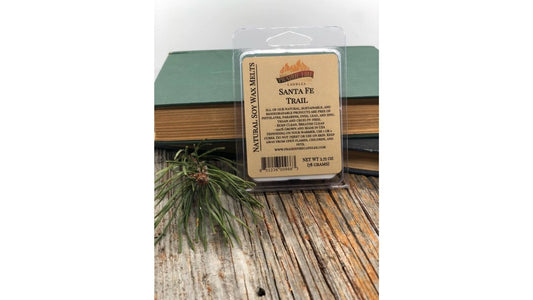
Cooler months call for a candle with some weight, and Santa Fe Trail delivers. Piñon pine, cedar, and smoke create a woody, fireside profile that suits fall and winter evenings. Same 100% soy wax, lead-free cotton wick, and phthalate-free fragrance as the rest of the line, at $19.99 with 50+ hours of burn time.
The smoke note is what separates it from a plain pine candle. It reads cozy, not ashy. Pair it with a wool throw and a dark room and it earns its place from October through February.
4. Oregon Trail Soy Wax Candle: Best Evergreen Scent for Large Rooms
For a big living room or open floor plan, Oregon Trail throws evergreen, cedar, and moss with enough presence to fill the space. The fresh, forest-floor scent is clean rather than heavy, and the 50+ hour burn means it holds up through long winter nights.
One insider note: in larger rooms, let the first burn run long enough for the melt pool to reach the glass edge. A full melt pool on the first light sets the candle up to burn evenly for its whole life. Skip that step and you get tunneling.
5. Bluestem and Ad Astra Soy Wax Candles: Best Fresh, Prairie-Inspired Scents
When you want something green and airy instead of woody, the Bluestem and Ad Astra jars are the answer. Bluestem pairs native grass, prairie sage, and citrus; Ad Astra layers bergamot, prairie grass, and sage. Both are $19.99, 100% soy, and phthalate-free.
Ad Astra Soy Wax Candle | 16 oz Double Wick Amber Apothecary Jar
These are the dinner-friendly scents in the lineup. They freshen a room without competing with food, which makes them the ones to light before guests arrive. The U.S. Environmental Protection Agency indoor air quality resources note that ventilation and source control matter for indoor air, and a low-soot candle with a trimmed wick fits that guidance well.
6. Citron Vert and Provence Soy Wax Candles: Best Citrus and Lavender Picks
Two jars cover the mood-shifters. Citron Vert is bright lemon peel and lemongrass, the one to light on a gray morning. Provence is lavender, citrus, and bergamot, a summer-meadow scent that winds a room down at night. Both run $19.99 with 50+ hours and the same clean soy and cotton-wick build.
For scent-sensitive shoppers, start with a single jar in a small room before committing to a full set. Even phthalate-free fragrance can bother some noses, so a low-stakes trial is the smart move.
Store candles away from direct sunlight and heat. Soy wax softens and can sweat fragrance oil in a hot window, which dulls the scent throw long before you light it.
7. Ad Astra 16 oz Double Wick: Best Value for Long Burn Time
The 16 oz Ad Astra double wick is the value play at $28.99 for 100+ hours. Two cotton wicks mean a wider, more even melt pool, so a big jar burns cleanly instead of tunneling. Same bergamot, prairie grass, and sage scent as the 9 oz, scaled up for large rooms and long evenings.
Run the math on cost per hour and this jar wins the lineup. It is the one to buy if you light a candle most nights and want to stop restocking every few weeks. The 3.75-inch amber jar is also the easiest to repurpose as a storage vessel once it is done.
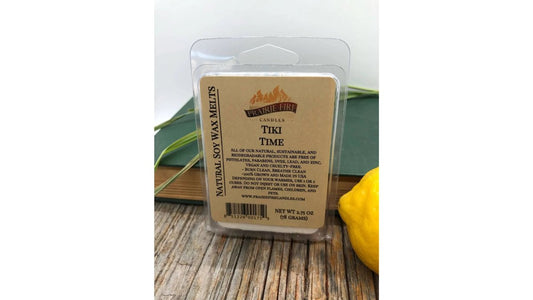
For the nights you want scent without a flame, the $3.99 soy wax melts use the same phthalate-free, dye-free formula in a recyclable clamshell. Same clean-burning philosophy, no wick required.
Frequently Asked Questions
What makes a candle eco-friendly?
A candle earns the label when three things line up: the wax, the wick, and the packaging. Plant-based waxes such as soy, coconut, and apricot are renewable and biodegradable. A cotton or paper wick with no lead or zinc core keeps the burn clean. Phthalate-free fragrance and recyclable or reusable containers finish the picture. Prairie Fire Candles, for example, uses 100% American soy wax, braided cotton wicks, and phthalate-free fragrance in amber jars you can repurpose after the candle is spent.
Are soy candles better for the environment than paraffin candles?
In most comparisons, yes. Soy wax comes from a renewable crop, is biodegradable, and burns at a lower temperature, which tends to produce less soot than paraffin. Paraffin is a petroleum byproduct, so it is not renewable. The gap narrows if the soy is shipped long distances or blended with paraffin without disclosure. Check the label for 100% soy or a named plant-based blend, and look for sourcing details such as grown and made in the USA.
How can you tell if a candle is non-toxic?
Read the ingredient list, not the front label. A non-toxic candle names its wax, its wick material, and its fragrance source. Look for phrases like phthalate-free, lead-free cotton wick, and paraffin-free. Vague claims such as natural or clean-burning mean little on their own. If a brand will not list wax type and wick material, treat the claim as unverified. Third-party testing or published ingredient pages are the strongest signal.
Are scented candles safe to burn indoors?
Most scented candles are fine indoors with normal ventilation and a trimmed wick. People with asthma, migraines, or fragrance sensitivity should start with a short burn in a well-aired room and watch for headaches or irritation. Fragrance-free or essential-oil-based options reduce exposure. Never burn a candle in a closed, unventilated space for hours, and keep the wick trimmed to 1/4 inch to limit soot.
Which candle wax is the most sustainable?
There is no single winner. Soy is renewable and widely available, beeswax is durable and naturally scented but uses more resources per pound, and coconut and apricot waxes burn cleanly but often travel further. The most sustainable choice is usually a locally made, single-wax candle with a cotton wick and minimal packaging, because transport and mixed materials often matter more than the wax itself.
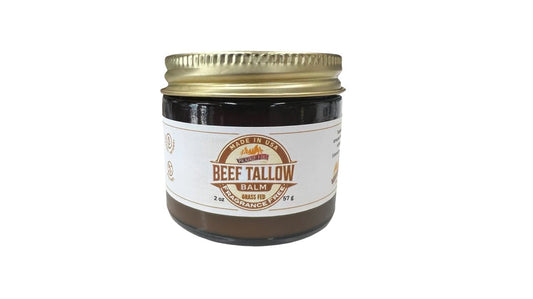
I have switched to tallow soap as well as tallow balm. It is all I use on my skin including my face and neck. Some soaps and lotions bother my face and full sleeve of tattoos. Tallow soap and balm completely eliminate any issues. I live that I am not putting a lot of chemicals on my body anymore..
Our family loves Prairie Fire soap!
Our favorite is the unscented olive oil soap but we recently added a few tallow bars to our order, they were wonderful as well! When my order arrived, I was pleasantly surprised that it included a sample of their
1/2 olive oil -1/2 tallow soap and we loved this too! We are so happy we found this company. Their products are great and their customer service is amazing!