
Tallow Balm vs Plant-Based Oils: Which to Choose
Table of Contents
- Tallow Balm vs Plant-Based Oils: The Core Differences
- Fatty Acid Composition and Skin Compatibility
- Plant-Based Oils for Skin: Barrier Support and Hydration
- Tallow Balm vs. Jojoba Oil: Occlusion Meets Lightweight Hydration
- Tallow Balm for Dry Skin: What It Does Well and Where It Falls Short
- Vegan Tallow Balm: Do Plant-Based Alternatives Match Up?
- Comedogenicity, Patch Testing, and Shelf Life by Ingredient
- Conclusion
- Frequently Asked Questions
Last Updated: October 21, 2026
Tallow Balm vs Plant-Based Oils: The Core Differences
Tallow balm is a rendered animal fat moisturizer, while plant-based oils are liquid fats pressed from seeds, nuts, and fruits. The two approach skin care from opposite directions: one is thick and occlusive, the other often light and fast-absorbing. Choosing between them comes down to your skin barrier, your climate, and how much weight you want on your face at night.
At Prairie Fire Candles, we render grass-fed beef tallow in small batches, so we have a clear stake in this debate. But we also keep cold-pressed olive oil in our own formula, which tells you something: this is not a contest where one side wins outright. Below, we break down fatty acid composition, comedogenicity, shelf life, and the practical differences that actually change your routine.

What Tallow Balm Is and How It Is Rendered
Tallow balm is a semisolid moisturizer made from purified beef fat, typically rendered from suet and blended with a liquid oil. Rendering means slowly melting raw fat to separate it from connective tissue and water, then straining and cooling the result. Good rendering produces a white, low-odor fat that stays firm at room temperature.
The rendering method matters more than most labels admit. Small-batch rendering at low heat preserves the fat-soluble vitamins naturally present in grass-fed fat, while high-heat industrial rendering can strip them.
What Plant-Based Oils Are and Common Examples
Plant-based oils are fats extracted from botanical sources, usually by cold pressing to preserve nutrients. Common examples include jojoba, olive, coconut, shea butter, pumpkin seed, and sunflower oil. Each has a distinct fatty acid profile, which is why they behave so differently on skin.
Cold-pressed oils retain more of their natural antioxidants than refined versions. That matters for oxidation and shelf stability, which we cover later. For now, hold onto this: "plant-based oils" is a category, not a single ingredient, and treating jojoba and coconut as interchangeable is where most comparisons go wrong.
Fatty Acid Composition and Skin Compatibility
Skin compatibility depends on fatty acid composition, not on whether the source is animal or plant. Human sebum is a mix of saturated and unsaturated fats, and oils that mirror that mix tend to feel more natural on skin.
Tallow is predominantly saturated fat, with roughly half of its fatty acids coming from oleic acid (a monounsaturated fat) and a meaningful share from stearic and palmitic acids (saturated fats). Jojoba is technically a wax ester rather than a triglyceride, and its structure closely resembles human sebum, which is why it absorbs quickly and rarely feels greasy. Olive oil is rich in oleic acid and low in linoleic acid.

That last point deserves attention. Linoleic acid is one of the essential fatty acids skin cannot produce on its own, and lower levels in sebum are associated with more reactive, blemish-prone skin. A plant oil high in linoleic acid may suit that skin type better than a saturated fat. The reverse is true for very dry, cracked skin, where a saturated, occlusive fat holds moisture in place.
Saturation also drives oxidation. Polyunsaturated fats like linoleic acid have multiple double bonds that react with oxygen, so they go rancid faster and offer less occlusion per gram. Saturated fats resist oxidation but can feel greasy. Neither is "better" in the abstract; the right pick depends on whether your skin needs repair or protection.
Key Takeaway
Match the fat to the job: linoleic-rich plant oils for reactive, blemish-prone skin; saturated, occlusive fats like tallow for dry, cracked, winter-stressed skin. The animal-versus-plant label tells you less than the fatty acid profile does.
A note on evidence: the skin-barrier science around essential fatty acids and occlusives is well established. Most guidance comes from fatty acid composition and general dermatology principles, so treat broad marketing claims about either category with appropriate caution.
Plant-Based Oils for Skin: Barrier Support and Hydration
Plant oils support the skin barrier in two ways: they supply fatty acids the barrier needs, and they slow water loss through occlusion. Lightweight oils like jojoba and pumpkin seed do this gently, which suits oily and combination skin. Heavier options like shea butter and coconut oil seal more aggressively.
Here is the trade-off nobody puts on the label. Oils high in polyunsaturated fats, or PUFA, oxidize faster and offer less occlusion. Oils high in saturated fats resist oxidation but can feel greasy. Neither is "better" in the abstract; the right pick depends on whether your skin needs repair or protection.
Pro Tip
Apply any oil or balm to slightly damp skin, not dry skin. The water underneath gets trapped, and you get noticeably better moisture retention from the same amount of product.
Tallow Balm vs. Jojoba Oil: Occlusion Meets Lightweight Hydration
Tallow balm wins on occlusion; jojoba oil wins on lightweight hydration. Tallow forms a breathable film that slows water loss for hours, which is why it suits dry skin, winter wind, and cracked heels. Jojoba absorbs quickly, feels nearly weightless, and rarely leaves residue.
The practical difference shows up fast. If you apply jojoba in the morning and your skin feels tight by afternoon, you need more occlusion. If tallow leaves you shiny and congested by day three, you need something lighter. Most people land on a hybrid: a light plant oil under makeup, a richer balm at night.
| Compare | Tallow Balm | Jojoba Oil |
|---|---|---|
| Texture | Firm, rich, semisolid | Liquid, lightweight |
| Occlusion | High | Low to moderate |
| Best for | Dry, cracked, mature skin | Oily, combination, acne-prone skin |
| Fatty acid strength | Saturated fats, oleic acid | Wax esters close to sebum |
| Shelf stability | Naturally stable | Stable, long shelf life |
| Skin feel | Protective film | Absorbs fast, minimal residue |
Tallow Balm for Dry Skin: What It Does Well and Where It Falls Short
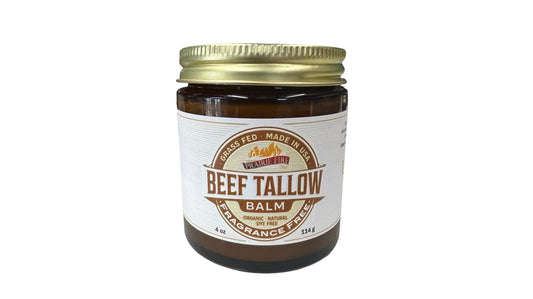
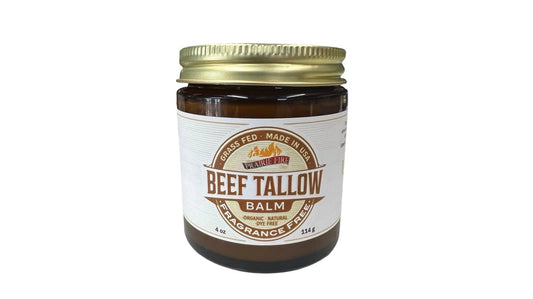
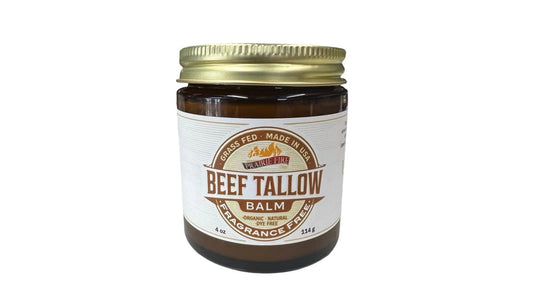
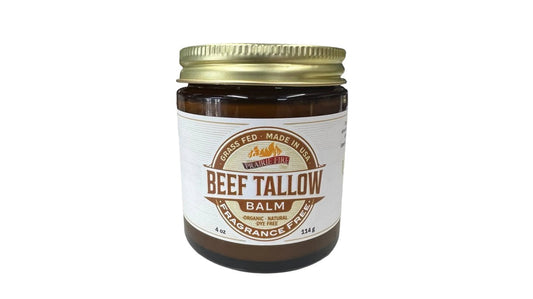
For dry skin, tallow balm does two things well: it seals in moisture and it delivers fat-soluble vitamins A, D, E, and K. Our 4 oz balm uses just two core ingredients, tallow and cold-pressed extra virgin olive oil, which keeps the formula simple for reactive skin.
Grass Fed Beef Tallow Balm 4 oz – Organic Natural Skin Moisturizer for Face →
Where it falls short is acne-prone or very oily skin. A rich, saturated balm can feel heavy and, for some people, contribute to clogged pores. It is also an animal-derived ingredient, which rules it out for vegan routines. And because it is concentrated, over-application is a common mistake. A pea-sized amount covers the face.
Watch Out
Do not judge a tallow balm by your first application. Applying too much on dry skin leaves a greasy film and convinces people the product "doesn't absorb." Start with a pea-sized amount on damp skin and give it a week.
Vegan Tallow Balm: Do Plant-Based Alternatives Match Up?
A vegan tallow balm is a plant-based formula built to mimic tallow's richness without animal ingredients. Typical builds combine shea butter or cocoa butter for body with a liquid oil like olive or jojoba for spreadability. The goal is the same protective feel, sourced differently.
Do they match up? On occlusion, a well-built plant alternative gets close. On vitamin content, they differ. On ethics and sourcing, plant formulas avoid the animal welfare question entirely, though palm oil sourcing raises its own environmental concerns, which is why we keep our soap palm oil free.
If you want the traditional route, our Grass Fed Beef Tallow Balm 4 oz is $25.99 and comes in a fragrance-free option for sensitive skin. For a gentler daily cleanse that splits the difference, our Organic Olive Oil & Grass Fed Beef Tallow Soap 50/50 pairs both traditions in one bar at $9.99.
Comedogenicity, Patch Testing, and Shelf Life by Ingredient
Comedogenicity varies by specific ingredient, not by category, and the popular 0-to-5 comedogenic scale has real limitations. Treat any rating as a starting hypothesis, not a verdict.
With that caveat, the ingredient-level picture is more useful than a category label. Tallow sits in the middle for most people, though individual response varies. There is no universal ranking that replaces testing on your own skin, and a product that clogs one person's pores may suit another.
Patch test before committing to a full jar. Apply a small amount to your inner forearm or jawline for three to five days and watch for redness, bumps, or irritation. This is the single most useful step for anyone with sensitive or allergy-prone skin.
Shelf life follows fatty acid composition and processing. Saturated fats like tallow resist oxidation and stay stable for a long time, especially when rendered cleanly and stored away from heat and light. Polyunsaturated oils like pumpkin seed go rancid faster.
Formulation and labeling change the practical answer more than the base fat does. Added fragrance, essential oils, preservatives, and blended ingredients can each trigger reactions independent of comedogenicity.
- Patch test on inner forearm for 3-5 days, ideally 1-2 weeks for leave-on products
- Check the ingredient list for a single added oil, not a long blend
- Confirm fragrance-free if you have sensitivities
- Store away from heat and sunlight
- [ ]
Watch Out
Stop use and consult a dermatologist if you develop persistent redness, swelling, or clusters of bumps after starting a new balm or oil. Comedogenicity ratings cannot predict an individual reaction.
Conclusion
The honest answer is that neither tallow balm nor plant-based oils wins for everyone. Dry, cracked, winter-stressed skin usually does better with the occlusion of a tallow balm. Oily, acne-prone, or vegan-preferring skin often does better with a lightweight, linoleic-rich plant oil. Many people need both, layered by season.
That is how we build our own line at Prairie Fire Candles. Our grass-fed tallow balms come in 2 oz at $19.99, 4 oz at $25.99, and 8 oz at $35.99, all rendered in small batches with a simple two-ingredient formula and a fragrance-free option. If you have severe sensitivities, start with the small jar, patch test, and see how your barrier responds.
Frequently Asked Questions
Is there such a thing as vegan tallow balm?
True tallow comes from rendered animal fat, so no balm made with beef tallow is vegan. Products marketed as vegan tallow balm swap in plant butters and waxes, usually shea butter, cocoa butter, or candelilla wax, to mimic the thick, occlusive texture. These can support the skin barrier and lock in moisture, but the fatty acid profile differs from animal tallow. Check the full ingredient list rather than the product name, since 'tallow' in a vegan product is a texture description, not an ingredient.
Which is better for dry skin, tallow balm or plant-based oils?
For very dry, flaky, or wind-chapped skin, tallow balm usually holds moisture longer because it is highly occlusive and low in water content. Plant-based oils for skin, such as jojoba or pumpkin seed oil, absorb faster and suit people who dislike a heavy film. Many routines work best with both: a plant oil on damp skin, then a thin layer of tallow balm for dry skin on cheeks, elbows, or heels. Patch test first, especially if your skin reacts easily.
Can plant-based oils clog pores or trigger acne?
Some can. Coconut oil is the most cited offender for acne-prone skin, and wheat germ oil also ranks high on comedogenicity scales. Jojoba oil, pumpkin seed oil, and cold-pressed olive oil are generally lower risk for most people, though individual reactions vary. Comedogenicity ratings are a rough guide. Introduce one new oil at a time and give it two weeks before judging.
How should I patch test a new balm or oil?
Apply a small amount to the inner forearm or behind the ear twice daily for three to five days. Watch for redness, itching, or small bumps. If nothing appears, test a coin-sized area on your jawline for another few days before using it on your full face. Stop at the first sign of irritation. Severe eczema or known allergies warrant a dermatologist's input before trying any new topical, including tallow balm.
Does tallow balm go rancid, and how long does it last?
Rendered beef tallow is naturally shelf stable and resistant to oxidation compared with many polyunsaturated plant oils, which is why tallow balm often carries a longer usable life. Store jars in a cool, dark place and keep water out of them. Cold-pressed oils high in polyunsaturated fats, like pumpkin seed oil, oxidize faster and should be bought in small bottles. Smell is your best cue: a sharp, paint-like odor means the product has turned.
Tags:
Related articles
Primally Pure Alternative for Sensitive Skin
Oct 12 2026