
Is Grass Fed Tallow Sustainable? A Balanced Look
Last Updated: November 1, 2026
Quick Summary
Grass fed tallow can be a reasonable choice because it is largely a byproduct of beef production, so its fat would otherwise go to waste. Its sustainability depends on the cattle system behind it, though, and cattle production still carries land use and methane impacts. Look for named ranch sources and clear third-party certifications before you accept the claim.
- Tallow is largely a byproduct of beef production, which is its strongest sustainability argument.
- Byproduct status does not make tallow environmentally neutral, since cattle impacts are allocated across the whole animal.
- Pasture-based systems can require more land and produce more methane per unit of meat than feedlot systems.
- Ask a brand which ranch and renderer supply its fat and which certification applies.
- Patch test any new tallow product, because individual skin reactions vary.
Table of Contents
- What Grass Fed Tallow Is and How It Is Rendered
- Grass-Fed vs Conventional Tallow Skincare: What Changes
- Beef Tallow as a Byproduct and What That Means for Sustainability
- The Environmental Impact of Beef Tallow Skincare Across the Lifecycle
- Trade-Offs in Cattle Production and Regenerative Pasture Farming
- Comparing Tallow With Plant-Derived Skincare Ingredients
- Sustainable Skincare Ingredients: How to Verify Sourcing Claims
- Choosing a Tallow Balm: Your Next Step
- Frequently Asked Questions
What Grass Fed Tallow Is and How It Is Rendered
Grass fed tallow is rendered fat from cattle raised primarily on pasture, and The sustainability question starts with understanding what the ingredient actually is, because the answer changes depending on how it is sourced and processed.
Tallow is the hard fat rendered from the suet around a beef animal's kidneys and loin. Rendering melts that fat at low heat, separates it from membranes and water, and filters it into a shelf-stable white or pale yellow solid. The process is old, simple and largely mechanical, which is one reason tallow has been used in soap and salves for generations.
The "grass fed" label describes diet, not the rendering method. Grass-finished cattle eat forage through their lives, which generally produces fat with a different fatty acid profile than grain-fed fat. Nutritional differences are real but modest in any single product, so buyers should treat the label as a sourcing claim to verify, not a guarantee of purity.
Grass-Fed vs Conventional Tallow Skincare: What Changes
A grass-fed claim changes the input, not the basic chemistry of the finished balm. Conventional tallow typically comes from grain-finished cattle, and both types can be rendered into a product that looks and performs similarly on the skin.
What does change is the supply chain behind the label. Grass-finished programs usually involve longer finishing periods, more pasture acreage per animal and tighter tracing from ranch to rendering facility. Those factors affect cost and land use, which is why sourcing transparency matters more than the label alone.
Ask whether a brand can name the ranch or region supplying its fat, and whether it can describe its rendering facility. Vague answers are a signal to look elsewhere.
Beef Tallow as a Byproduct and What That Means for Sustainability
Beef tallow is largely a byproduct of meat production. The cattle are raised for beef, and the fat that would otherwise be discarded or sent to rendering becomes an ingredient. This is the strongest argument for tallow's sustainability: it uses a part of the animal that would otherwise go to waste.
The byproduct framing has limits. Its environmental credit depends on the beef system behind it, and the impacts of cattle production, including land use and methane, belong to the whole animal, not just the fat. A byproduct does not carry zero impact; its footprint is allocated across everything the animal produced.
Treat "byproduct" as a reason tallow can be a reasonable use of existing resources, not proof that it is environmentally neutral.
The Environmental Impact of Beef Tallow Skincare Across the Lifecycle
A fair assessment looks beyond the ingredient. Life-cycle thinking covers sourcing, rendering, formulation, packaging, transport, use and disposal, and the answer changes depending on where you draw the system boundary.
Define the boundary first. A cradle-to-gate study stops at the finished ingredient or product leaving the facility. A cradle-to-grave study follows the product through consumer use and disposal. A farm-to-farm comparison of tallow versus olive oil is not the same as a jar-to-jar comparison of two finished balms. When a brand cites an environmental number, ask which boundary it used; a figure without a boundary is not comparable to anything.
Allocate the beef footprint honestly. Cattle are raised primarily for meat and milk, so tallow is a co-product, not the primary driver of the herd's impact. Two allocation methods dominate: mass allocation (split impact by weight of each output) and economic allocation (split by market value). Because tallow is a low-value fraction of the carcass, economic allocation usually assigns it a small share of the herd's total footprint, while mass allocation assigns a larger share.
Compare impact categories, not a single score. For a tallow balm, the largest share of impact typically sits upstream in cattle production, driven by enteric methane, land occupied by pasture and feed, and manure management. Rendering and formulation consume comparatively little energy per unit of finished product because rendering is a low-temperature, largely mechanical process.
Treat "natural" and "regenerative" as claims, not proof. Neither word establishes a lower footprint. Regenerative grazing can improve soil carbon and biodiversity on some ranches, but measured outcomes vary widely by climate, stocking rate and management, and the science on net greenhouse-gas benefit is still contested. The honest position is that tallow can be a reasonable use of an existing resource while still carrying the upstream impacts of cattle production.
Key Takeaway
A sustainability claim is only meaningful when it names the system boundary, the allocation method and the impact categories measured. Ask for all three before comparing two products.
Packaging, Shelf Life, and Product-Level Footprint
Packaging can rival the ingredient in footprint for a small jar. Glass is heavy and energy-intensive to produce but widely recyclable; aluminum is light and highly recyclable but energy-intensive to smelt; paper and fiber are light but often laminated. Recycling outcomes depend on what your local program actually accepts, so check your municipality's rules rather than assuming a label's recyclability claim translates into real recovery.
Shelf life also matters. Tallow is stable at room temperature for a long time when rendered cleanly and kept away from heat and light, which can reduce waste from spoilage. A product that is used up before it goes rancid has a smaller footprint per application than one discarded half-full. Water-free anhydrous balms generally resist microbial growth better than water-containing creams, but they can still oxidize; store them cool and dark, and replace them if they smell rancid.
Transport is a smaller but real line item: a heavy glass jar shipped long distances carries more freight emissions than a lightweight tin. None of these factors decides the question alone, they add up across the whole product.
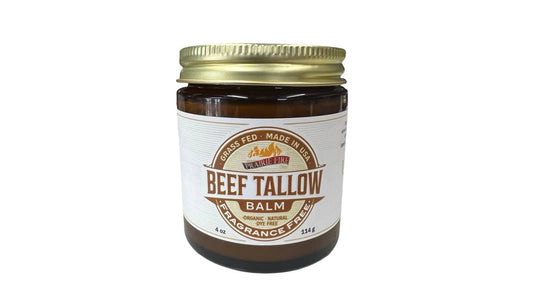
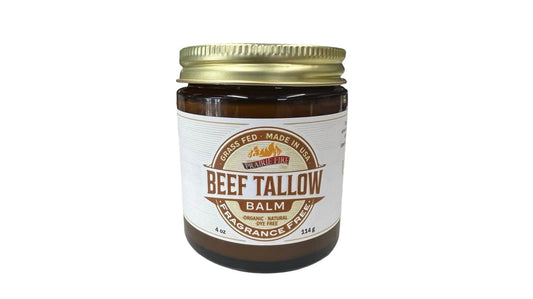
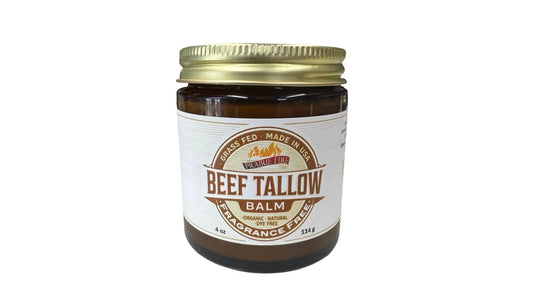
Grass Fed Beef Tallow Balm 4 oz – Organic Natural Skin Moisturizer for Face →
Trade-Offs in Cattle Production and Regenerative Pasture Farming
Grass-finished beef is often promoted alongside regenerative pasture farming, a set of practices such as rotational grazing that aim to improve soil health and carbon storage. Results vary widely by location, management and climate, and the scientific evidence on net carbon benefits is still debated.
The trade-offs are real. Pasture-based systems can require more land and produce more methane per unit of meat than feedlot systems, while potentially supporting soil and biodiversity benefits. Neither system is free of impact, and an honest sustainability claim names both sides.
When a brand cites regenerative farming, ask which practices are used, how they are verified and whether any third-party certification backs the claim.
Comparing Tallow With Plant-Derived Skincare Ingredients
Plant oils such as olive, jojoba and shea are common alternatives. Each has its own footprint: cropland use, water demand, fertilizer, deforestation risk in some supply chains and processing energy. Palm-derived ingredients in particular carry well-known deforestation concerns, which is why many buyers look for palm-free formulas.
Skin compatibility is a separate question from environmental impact. Tallow's fatty acid profile is often described as similar to skin's own lipids, but individual reactions vary, and people with sensitivities should patch test any new product regardless of its origin. Plant oils can also irritate some skin types. Neither category is automatically gentler.
A balanced comparison weighs sourcing, land use, processing and how well each ingredient works for your skin.
Sustainable Skincare Ingredients: How to Verify Sourcing Claims
Sustainability language on skincare labels is often loosely defined. A few practical checks help separate substance from marketing, but the checks only work if you know what each one is actually verifying.
Traceability: can the brand name the ranch and the renderer? A credible grass-fed claim should trace from a named ranch or region to a specific rendering facility. Ask whether the brand buys directly, through a cooperative, or on the commodity market.
Certifications: know what each one covers. Third-party programs verify different things, and none of them verifies everything. A grass-fed or pasture-raised certification typically addresses diet and pasture access; an animal-welfare certification addresses handling and living conditions; an organic certification addresses feed and prohibited inputs.
Feed and finishing. "Grass-fed" describes diet; "grass-finished" means forage through the animal's life. Some programs allow grain during finishing, and labeling rules differ by program. If the distinction matters to you, ask the brand to confirm which term applies and what the finishing ration is.
Animal welfare. Ask how cattle are handled, whether castration and dehorning use pain mitigation, and what the slaughter protocol is. These are legitimate sourcing questions, and a brand that sources from a named ranch should be able to answer them or point to the ranch's own documentation.
Genuine byproduct. Ask whether the tallow is a true co-product of a meat operation or whether the herd is raised specifically for fat.
Purity and formulation. Ask about filtration, deodorization and any additives. Fully refined tallow is neutral and shelf-stable; less-refined tallow retains more of its natural color and scent but can vary batch to batch. Neither is inherently better, but the choice should be disclosed.
Evidence quality and skin safety. Separate what is established from what is claimed. People with sensitivities should patch test on a small area before full use. Seek clinical advice for persistent rashes or suspected allergic reactions.
Watch Out
A certification logo, a "regenerative" label and a "clean" marketing claim each verify something different, and none of them verifies the whole product's footprint. Ask what specifically is being certified before you treat it as proof.
Pro Tip
Keep a short list of questions for any brand: Which ranch and renderer? Which certification and who audits it? Is the tallow a true byproduct? What is the packaging made of and is it accepted in my local recycling program? A brand that answers these clearly is doing the work; one that deflects is telling you something too.
Choosing a Tallow Balm: Your Next Step
If you decide a tallow balm fits your routine, start by checking the ingredient list and sourcing details, then read our guide to tallow balm ingredients to look for before you buy. Prairie Fire Candles makes its 4 oz grass-fed tallow balm in Kansas, and our comparison of tallow with plant-based oils can help you weigh the options. Patch test any new product, and keep the sustainability questions above in mind when you compare brands.

Frequently Asked Questions
Is grass fed tallow good for your skin?
Tallow is rich in fatty acids such as oleic and stearic acid, which are structurally similar to lipids found in human skin. It is sold as a simple moisturizer. Evidence from controlled trials specific to grass-fed tallow is limited, so results vary. Patch testing a small area for several days before full use is a sensible step, especially for anyone with eczema or known allergies.
Does tallow soap actually work?
Tallow soap cleanses through saponification, the process that turns fat and lye into soap. A properly cured bar is designed to cleanse. Performance depends on curing time and formulation. Sodium hydroxide is consumed during saponification, so the finished bar does not contain free lye when fully cured. Buyers with sensitive skin should still check the ingredient list and test a new bar first.
Is grass-fed tallow sustainable for skincare?
Sustainability depends on the full lifecycle, including cattle production, rendering energy, packaging, and shelf life. Tallow is a byproduct of beef production, which gives it a use for material that would otherwise be discarded. Cattle production carries real environmental costs, including methane and land use, so tallow is not automatically low impact. Buyers can look for third-party certifications, transparent sourcing details, and recyclable packaging to judge a specific product.
What should you look for when buying grass-fed tallow skincare?
Look for a clear statement that the tallow is both grass-fed and grass-finished, a named source region or farm, and a short ingredient list. Check whether the product is made in a facility with USDA inspection or equivalent oversight, and whether the brand discloses rendering methods. Ask whether packaging is recyclable or reusable. A reputable seller should answer these questions directly before you buy.

Tags:
Previous
How to Choose Clean Burning Candles for Small Rooms in 2026
Next
Are Natural Alternatives Better for Sensitive Skin?
Related articles
How Can You Reduce Plastic Waste at Home?
Oct 26 2026
How to Understand Why Artisan Candles Cost More
Oct 24 2026
Tallow Balm vs Plant-Based Oils: Which to Choose
Oct 20 2026