
Grass-Fed Beef Tallow for Skin: A How-To Guide
Table of Contents
- What Is Grass-Fed Beef Tallow and Why It Matters for Skin
- Key Nutrients in Grass-Fed Beef Tallow
- Benefits for Dry and Reactive Skin
- Is Beef Tallow Comedogenic? What You Need to Know
- How to Apply Tallow Balm to Face and Body
- Choosing the Best Tallow Balm for Dry Skin in 2026
- Tallow vs. Synthetic Moisturizers: Why the Difference Matters
- Common Mistakes to Avoid When Using Tallow
- Frequently Asked Questions
Last Updated: September 30, 2026
What Is Grass-Fed Beef Tallow and Why It Matters for Skin
Beef tallow skin care uses rendered fat from grass-fed cattle raised on pasture, processed into a balm that mimics your skin's natural oils. Unlike conventional moisturizers loaded with water and preservatives, tallow is pure fat, concentrated, shelf-stable, and biocompatible with human skin.
The reason tallow works so well comes down to chemistry. Your skin produces sebum, a fatty mixture that protects and hydrates. Grass-fed beef tallow has a nearly identical fatty acid profile. This similarity means your skin recognizes it immediately, absorbing it without the inflammation or sensitivity that synthetic moisturizers often trigger.

The Rendering Process and Sourcing
Rendering is simple: fat is slowly heated until it liquefies, then strained and cooled into a solid balm. The quality depends entirely on the source animal. Grass-fed cattle, raised on pasture rather than grain, produce tallow rich in omega-3 fatty acids and conjugated linoleic acid (CLA). Grain-fed cattle produce tallow with a different lipid profile, less nutrient-dense.
At Prairie Fire Candles, we source grass-fed tallow from cattle raised on native pasture in Kansas. Small-batch rendering preserves the nutrient content that industrial processing destroys. This matters because heat and oxidation degrade the vitamins and essential fatty acids that make tallow effective for skin repair.
How Tallow's Lipid Profile Supports Your Skin Barrier
Your skin barrier is a lipid-rich layer that keeps moisture in and irritants out. When this barrier breaks down, water escapes (transepidermal water loss), and reactive skin flares. Synthetic moisturizers sit on top of skin. Tallow penetrates.
The lipid barrier thrives on saturated and monounsaturated fats. Grass-fed tallow contains both. It also includes fat-soluble vitamins (A, D, E, K) that your skin barrier needs to function. These nutrients are bioavailable, your skin can actually use them, unlike many synthetic skincare ingredients that remain on the surface.
Key Nutrients in Grass-Fed Beef Tallow
Grass-fed beef tallow contains nutrients that directly support skin health:
- Vitamin A: Supports cell turnover and collagen production. Reduces fine lines and thickens the epidermis.
- Vitamin D: Regulates immune function in skin. Deficiency correlates with eczema and psoriasis flares.
- Vitamin E: Antioxidant that protects against free radical damage and UV stress.
- Vitamin K: Supports skin repair and reduces inflammation. Often missing from plant-based skincare.
- Essential fatty acids: Omega-3 and omega-6 in the correct ratio maintain the lipid barrier and reduce systemic inflammation.
- Conjugated linoleic acid (CLA): Found primarily in grass-fed fat. Reduces inflammatory markers in skin.
These nutrients are fat-soluble, meaning they require dietary fat to be absorbed. When applied topically to skin, they penetrate the lipid barrier and reach living cells. Water-based moisturizers cannot deliver them.
Benefits for Dry and Reactive Skin
Dry skin means your barrier is compromised. Reactive skin means your barrier is inflamed. Tallow addresses both.
For dry skin, tallow provides occlusive protection, it seals moisture into your skin without stripping natural oils.
Is Beef Tallow Comedogenic? What You Need to Know
The comedogenic rating scale measures whether a substance clogs pores on a scale of 0 (non-comedogenic) to 5 (highly comedogenic). Grass-fed beef tallow ranks 2-3, placing it in the low-to-moderate range. To understand what this means for your skin, context matters.

How Tallow Compares to Other Oils
Coconut oil, often touted as a skincare staple, ranks 4 on the comedogenic scale, significantly higher than tallow. Jojoba oil ranks 2, the same as tallow. Mineral oil ranks 0. Olive oil ranks 2-3. The takeaway: tallow is less likely to clog pores than coconut oil, comparable to jojoba, and only slightly more occlusive than mineral oil.
Why Tallow Doesn't Clog Pores (Even Though It's Occlusive)
Tallow is occlusive, meaning it seals moisture into skin. Occlusion alone doesn't cause congestion. Congestion happens when three conditions align: (1) pores are already clogged with sebum and dead cells, (2) bacteria proliferate in that environment, and (3) the skin barrier is too compromised to shed those cells naturally.
Grass Fed Beef Tallow Balm 4 oz →
The Purging Phase: What's Actually Happening
Many people switching from conventional moisturizers to tallow experience a period where skin appears worse, more congestion, more redness. This is often called "purging." What's actually happening: tallow's occlusive properties are preventing transepidermal water loss, which allows your skin to hydrate and shed damaged cells more efficiently. Bacteria and dead cells that were trapped deeper in pores are being pushed to the surface.
Who Should Use Tallow and Who Should Proceed Cautiously
Tallow works best for dry, reactive, and normal skin types. If you have oily, acne-prone skin, test it on a small area (inner arm or behind the ear) for 3-5 days before applying to your face. If you have active cystic acne or severe congestion, start with a lighter occlusive (like jojoba oil) and introduce tallow once your barrier has stabilized.
How to Apply Tallow Balm to Face and Body
Tallow works best when applied to slightly damp skin. Water helps the lipids penetrate deeper.
Step-by-Step Application Process
- Cleanse your skin with a gentle cleanser. Pat dry but leave skin slightly damp, not soaking wet.
- Scoop a pea-sized amount with your fingertip. For the face, this is enough. For the body, use a marble-sized amount.
- Warm the balm between your palms by rubbing your hands together for 3-5 seconds. This softens it and makes spreading easier.
- Apply with gentle pressure, massaging in upward motions. Don't rub hard, let the balm absorb on its own.
- Wait 2-3 minutes before applying other products or getting dressed. Tallow absorbs faster than you'd expect.

Best Practices for Maximum Absorption
- Apply to damp skin. This is the single biggest factor. Damp skin absorbs tallow faster and more completely than dry skin.
- Use less, not more. A pea-sized amount for the face is all you need. More product doesn't mean better results, it just sits on your skin.
- Don't mix with water-based products. Tallow and water-based serums don't blend. Apply tallow first, wait a few minutes, then add water-based products if needed.
- Store in a cool place. Tallow melts around 90°F. In summer, keep it in a cool drawer or the refrigerator. It hardens again when cool.
- Use consistently. Your skin barrier rebuilds over weeks, not days.
Choosing the Best Tallow Balm for Dry Skin in 2026
Quality varies dramatically. Most commercial tallow balms use grain-fed tallow or cut it with cheaper oils. This matters because the nutrient density drops.
What to Look for in Quality Tallow Products
- Grass-fed source. This is non-negotiable. Grain-fed tallow lacks the nutrient profile that makes tallow effective.
- Minimal ingredients. The best balms contain tallow and one or two complementary oils (like olive oil). Anything else is filler.
- Small-batch rendering. Industrial rendering uses high heat and oxidizes nutrients. Small-batch producers use lower temperatures and preserve more of the vitamin content.
- Transparent sourcing. Know where the tallow comes from. Reputable makers list the ranch or region.
- No added fragrance or dyes. Synthetic fragrance and dyes defeat the purpose of using tallow. If you want scent, choose balms with essential oils only.
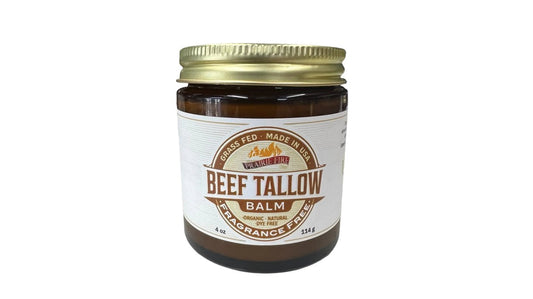
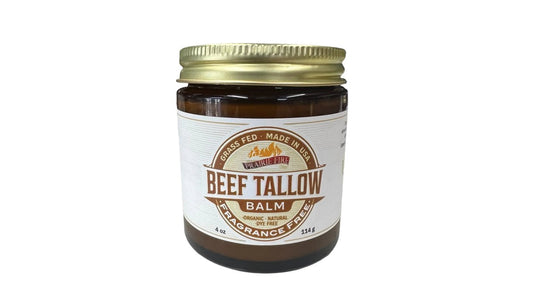
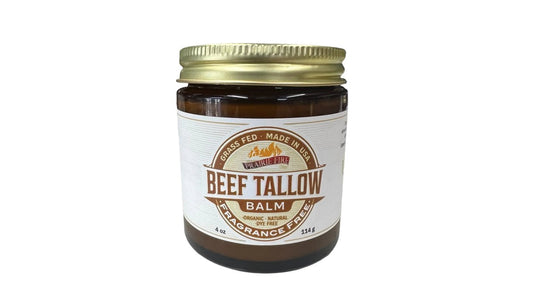
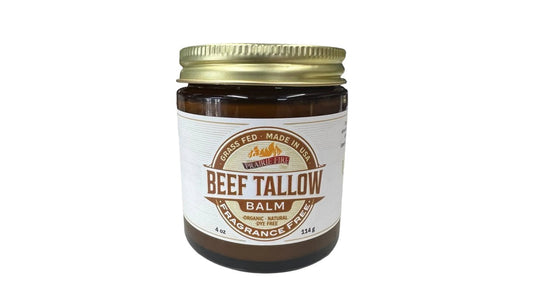
Prairie Fire Candles' Grass Fed Beef Tallow Balm is sourced from grass-fed cattle raised on native pasture in Kansas. It contains only organic grass-fed tallow and cold-pressed olive oil. Small-batch rendering preserves the nutrient density. The 4 oz jar costs $25.99.
Shelf Life and Preservation
Tallow is naturally shelf-stable because it contains no water. Water-based products require preservatives to prevent bacterial growth. Tallow doesn't.
Tallow vs. Synthetic Moisturizers: Why the Difference Matters
Synthetic moisturizers (creams, lotions, serums) are water-based. Water and oil don't mix, so manufacturers add emulsifiers to blend them. Emulsifiers can disrupt your skin barrier. Preservatives prevent bacterial growth in the water phase. Many people react to these.
Common Mistakes to Avoid When Using Tallow
Using too much. This is the biggest mistake. People expect tallow to feel like a conventional moisturizer, so they apply a dime-sized amount. This leaves a greasy film. A pea-sized amount is enough for the entire face. Start small and adjust.
Frequently Asked Questions
Is beef tallow comedogenic and will it clog my pores?
Grass-fed beef tallow has a comedogenic rating of 2 on a 0-5 scale, making it non-comedogenic for most people. Its fatty acid profile closely mirrors human sebum, allowing it to penetrate the skin barrier rather than sit on top. The key is application: use a pea-sized amount on slightly damp skin. If you have extremely acne-prone skin, start with a small test patch. Most users with reactive or eczema-prone skin find tallow balm supportive rather than pore-clogging because it strengthens the lipid barrier instead of disrupting it.
How often should I use grass-fed beef tallow balm on my face?
You can use grass-fed beef tallow balm daily, typically once or twice per day depending on your skin's needs. Most people apply it as a nighttime moisturizer or after cleansing when skin is slightly damp. If you have very dry or reactive skin, morning and evening application works well. A pea-sized amount is sufficient for the entire face. If your skin feels greasy, reduce frequency or the amount used, tallow is concentrated, so a little goes a long way.
Can I use beef tallow balm if I have severe eczema or sensitive skin?
Grass-fed beef tallow is well-suited for eczema-prone and reactive skin because it supports skin barrier repair without synthetic additives. Its essential fatty acids and vitamins A, D, E, and K help reduce transepidermal water loss and soothe inflammation. However, if your skin reacts to almost everything, start with a small patch test on your inner arm or behind your ear first. Use the fragrance-free version to rule out essential oil sensitivity. Apply to slightly damp skin to lock in moisture.
How should I store grass-fed beef tallow balm to maintain freshness?
Grass-fed beef tallow is naturally shelf-stable and concentrated, so it doesn't require refrigeration. Store it in a cool, dark place away from direct sunlight and heat, a bathroom cabinet or bedroom drawer works well. Tallow can last 1-2 years when stored properly because it contains no water or preservatives. Avoid leaving the jar open for extended periods, and use a clean applicator to prevent contamination. If you notice any off-smell or discoloration, discard it. The fragrance-free versions stay fresher longer than scented varieties.
Tags:
Previous
Why Are Paraffin Candles Bad for You? A 2026 Guide
Next
How to Soothe Eczema with Tallow: A Gentle Guide
Related articles
Tallow Balm vs Plant-Based Oils: Which to Choose
Oct 20 2026
Primally Pure Alternative for Sensitive Skin
Oct 12 2026