

How to Soothe Eczema with Tallow: A Gentle Guide
Table of Contents
- What Is Beef Tallow and Why It's Used for Eczema
- Benefits of Grass-Fed Tallow for Skin
- How to Apply Tallow Balm for Eczema
- Tallow vs Commercial Eczema Creams
- Sourcing Quality Tallow and Storage Tips
- Integrating Tallow into Your Eczema Care Routine
- Frequently Asked Questions
Last Updated: October 2, 2026
What Is Beef Tallow and Why It's Used for Eczema
Beef tallow is rendered fat from cattle, and people are turning to it to soothe eczema because its fatty acids closely match the oils your skin makes on its own. Learning how to soothe eczema with tallow starts with understanding why this old-fashioned ingredient is finding new fans.

The Skin Barrier Connection
Your skin barrier is the outer layer that locks in water and keeps irritants out. When it weakens, moisture escapes and irritants slip in.
Benefits of Grass-Fed Tallow for Skin
Grass-fed tallow brings deep moisture and barrier support without a long ingredient list. That combination is why so many people with dry, sensitive skin give it a try. But the reason it works is more specific than "it's natural", it comes down to the fatty acid profile and how that profile interacts with a compromised skin barrier.

- Fatty acids that mirror your skin's own oils. Tallow is roughly half saturated fat and half monounsaturated fat, with a smaller share of polyunsaturated fat. The dominant fatty acids are oleic acid, palmitic acid, and stearic acid, the same families that show up in human sebum. That similarity is why tallow spreads and absorbs the way it does instead of sitting on top of the skin like a wax.
- Vitamins A, D, E, and K found naturally in the fat. These are fat-soluble vitamins, so they ride along in the tallow itself rather than being added as a separate ingredient. Levels vary by the animal's diet and the rendering method, so no two batches are identical.
- No water content. Because there is no water, the balm is concentrated and long-lasting, and it does not need preservatives to stay stable.
- Fragrance-free options for reactive skin.
Why the Fatty Acid Profile Matters for Eczema
Eczema skin tends to be low in ceramides and certain fatty acids, which is part of why the barrier leaks moisture. Oleic acid is a penetration enhancer, it helps other ingredients slip into the outer layer of skin. Palmitic and stearic acids are heavier and form more of a seal. A tallow balm gives you both at once: the lighter oleic acid carries moisture-friendly compounds in, and the heavier saturated fats slow water loss back out.
What Tallow Does Not Do
It is worth being honest about the limits. Tallow is an emollient and an occlusive, it softens skin and slows water loss. It is not an anti-inflammatory drug, and it does not suppress the immune response that drives an eczema flare. If a patch is red, hot, and actively inflamed, tallow will not calm it the way a prescribed topical corticosteroid will.
Key Takeaway
Tallow works because its fatty acids resemble the ones your barrier is missing. It supports moisture retention, it does not treat active inflammation.
A Note on the Evidence
Most of what is written about tallow and eczema is anecdotal. There is no large randomized trial specifically testing beef tallow balm on atopic dermatitis. The mechanistic case, fatty acid similarity, occlusive moisture retention, fat-soluble vitamins, is plausible and consistent with what dermatologists already recommend for barrier care. But "plausible" is not "proven," and anyone selling tallow who tells you otherwise is overselling.
How to Apply Tallow Balm for Eczema
The best way to apply tallow balm is to pat it onto slightly damp skin right after a bath or shower, while your skin can still trap water. Timing matters more than technique here.
Follow these steps:
- Clean the area with a gentle, fragrance-free cleanser.
- Pat skin almost dry, leaving it slightly damp.
- Warm a pea-sized amount between your fingers.
- Press and pat the balm into the patch. Do not rub hard.
- Let it absorb for a minute before dressing.
- Reapply to dry patches two to three times a day.
Pro Tip
Apply balm within three minutes of getting out of the shower. That window is when damp skin absorbs and holds the most moisture.
Patch Testing Protocol
Patch testing is the step most people skip, and it is the one that prevents a nasty surprise. Even natural ingredients can trigger a reaction in sensitive skin.
Run this test before you commit:
- Apply a small amount to your inner forearm
- Leave it uncovered for 24 hours
- Check for redness, itching, or swelling
- Repeat on a second spot for 48 hours
- Wait for a calm result before using it on eczema patches
Tallow vs Commercial Eczema Creams
Tallow and commercial eczema creams work differently, and the right choice depends on what your skin needs. Tallow is a simple, fat-based emollient; commercial creams are water-based and often medicated.
Here is how they compare:
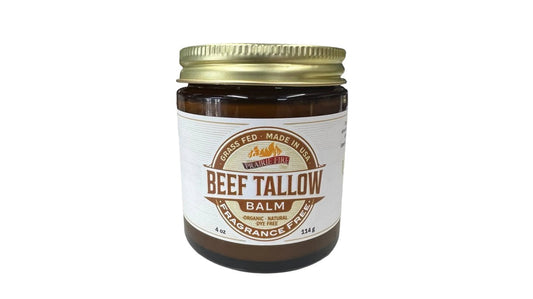
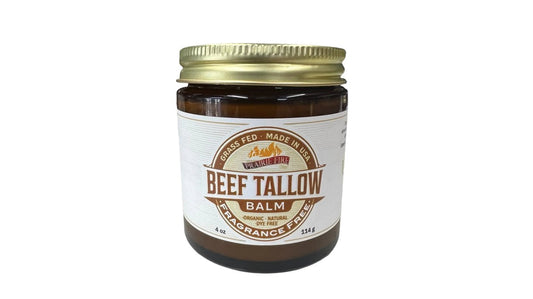
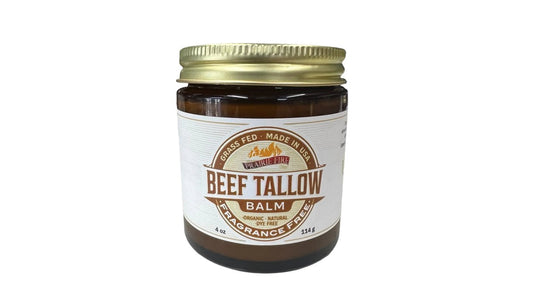
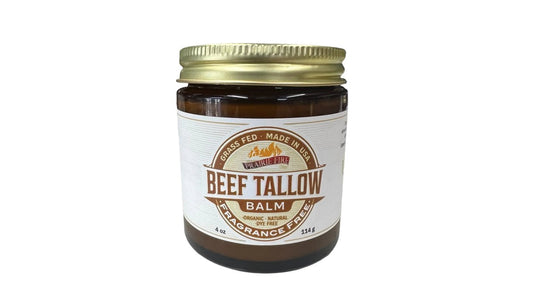
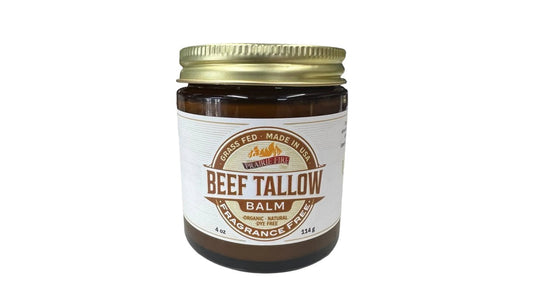
Grass Fed Beef Tallow Balm 4 oz →
| Feature | Tallow Balm | Commercial Eczema Creams |
|---|---|---|
| Base | Rendered fat, oil | Water plus emulsifiers |
| Preservatives | None needed | Usually required |
| Ingredient list | Very short | Often long |
| Medicated options | No | Some contain steroids |
| Best for | Daily moisture, barrier support | Active flares, prescriptions |
Sourcing Quality Tallow and Storage Tips
Quality makes or breaks a tallow balm, and this is the section most articles skip. Two balms can both say "grass-fed beef tallow" on the label and behave completely differently on your skin, because diet, rendering method, and storage all change the fatty acid profile and the risk of irritation.

Why Grass-Fed vs. Grain-Fed Matters
Cattle finished on grain tend to produce fat with a higher proportion of omega-6 polyunsaturated fatty acids relative to omega-3s. Grass-finished cattle tend to have a more balanced ratio and higher levels of fat-soluble vitamins like A and E. For a balm you are putting on broken skin, that difference is not trivial, a more oxidized, more polyunsaturated fat is more prone to going rancid, and rancid fat is a known skin irritant.
Rendering Method Changes the End Product
There are two main ways tallow gets rendered, and they produce different balms:
- Wet rendering uses water and heat to separate fat from tissue. It is faster and higher-yield, but the higher heat can degrade some of the delicate fat-soluble vitamins and produce a more neutral, less nutrient-dense fat.
- Dry rendering uses low, slow heat without water. It takes longer and yields less, but it preserves more of the vitamins and the natural beefy scent. Most small-batch producers use this method.
Quality Indicators to Look For
- Grass-finished sourcing, stated explicitly
- Small-batch, low-heat rendering mentioned on the label or site
- Short ingredient list you can read, tallow, maybe one or two oils, nothing else
- Fragrance-free options for reactive skin
- Batch dates or lot numbers so you can tell how fresh it is
- Clear sourcing you can verify, a farm name, a region, a rancher
Storage: How to Prevent Rancidity
Rancidity is oxidation of the fat. It is the single most under-discussed risk with tallow balms, and it matters because oxidized fat can trigger or worsen the exact inflammation you are trying to calm.
- Keep it cool. A cabinet away from the stove is fine. A hot car or a sunny windowsill is not.
- Keep it dark. Amber or opaque jars beat clear ones. If your balm came in a clear jar, store it in a drawer.
- Keep it sealed. Every time you open the jar, oxygen gets in. Close it promptly and don't leave it open on the counter.
- Keep it clean. Use clean, dry fingers or a small spatula. Water introduced into the jar can create pockets where bacteria and mold grow.
How to Tell If Your Balm Has Gone Bad
Your nose is the best test. Fresh tallow has a mild, slightly beefy smell. Rancid tallow smells sharp, sour, or like old crayons. If the texture has turned grainy, tacky, or unusually yellow, that is another sign. When in doubt, throw it out, a new jar costs far less than a flare.
Watch Out
Do not store tallow balm on a sunny windowsill or in a hot car. Heat and light break down the fat and shorten its shelf life fast, and oxidized fat can irritate eczema-prone skin.
Pro Tip
If you buy in bulk, keep the jar you are using out and store the rest in the refrigerator. Cold, dark, sealed storage can extend shelf life well past the label date.
Integrating Tallow into Your Eczema Care Routine
Tallow fits into a routine as your daily moisturizer, not as a replacement for medical care. The goal is to support your barrier so flares happen less often.
A simple daily rhythm:
- Morning: light layer on dry patches
- After shower: balm on damp skin
- Night: thicker layer on rough areas
- During flares: follow your doctor's plan first
Frequently Asked Questions
Will beef tallow heal eczema?
Beef tallow is not a cure for eczema, but it can help soothe dry, irritated skin by supporting the skin barrier. Eczema is a chronic condition with no known cure. Tallow's fatty acids and vitamins may reduce transepidermal water loss and calm flare-ups, but it should be part of a broader management plan. If you have severe eczema, talk to your dermatologist before trying new products.
How often should you apply tallow balm to eczema-prone skin?
For best results, apply tallow balm two to three times daily, especially after bathing while skin is still damp. A pea-sized amount is enough for the face; use more for larger areas. During flare-ups, you may need to apply more frequently. Consistency matters more than quantity. If irritation occurs, stop use and consult a doctor.
Are there any side effects of using tallow on eczema?
Some people may experience an allergic reaction or skin sensitivity to tallow, though it is generally well-tolerated. Always do a patch test on a small area of skin before widespread use. Signs of reaction include redness, itching, or swelling. If you have a known allergy to beef or dairy, avoid tallow. Store your balm properly to prevent rancidity, which can irritate skin.
Is grass-fed tallow better for sensitive skin than synthetic lotions?
Grass-fed tallow contains naturally occurring vitamins A, D, E, and K, plus fatty acids that mimic skin's lipids. It is often fragrance-free and dye-free, which reduces exposure to common irritants found in some commercial lotions. However, 'better' depends on your individual skin. Some people with eczema do well with tallow, while others may still react. Patch testing is essential.
Eczema is stubborn, and finding a moisturizer that does not irritate reactive skin can feel impossible. Prairie Fire Candles makes small-batch, grass-fed tallow balms with simple ingredients, no dyes, and a fragrance-free option for sensitive skin. Every balm supports your skin barrier with vitamins A, D, E, and K, and our fragrance-free tallow soap bars cleanse without harsh detergents. Get started with Prairie Fire Candles and give your skin a gentler daily routine.
Tags:
Previous
Grass-Fed Beef Tallow for Skin: A How-To Guide
Next
Why Non Toxic Candles Are Expensive: 2026 Price Guide
Related articles
How to Understand Why Artisan Candles Cost More
Oct 24 2026
Tallow Balm vs Plant-Based Oils: Which to Choose
Oct 20 2026
Primally Pure Alternative for Sensitive Skin
Oct 12 2026